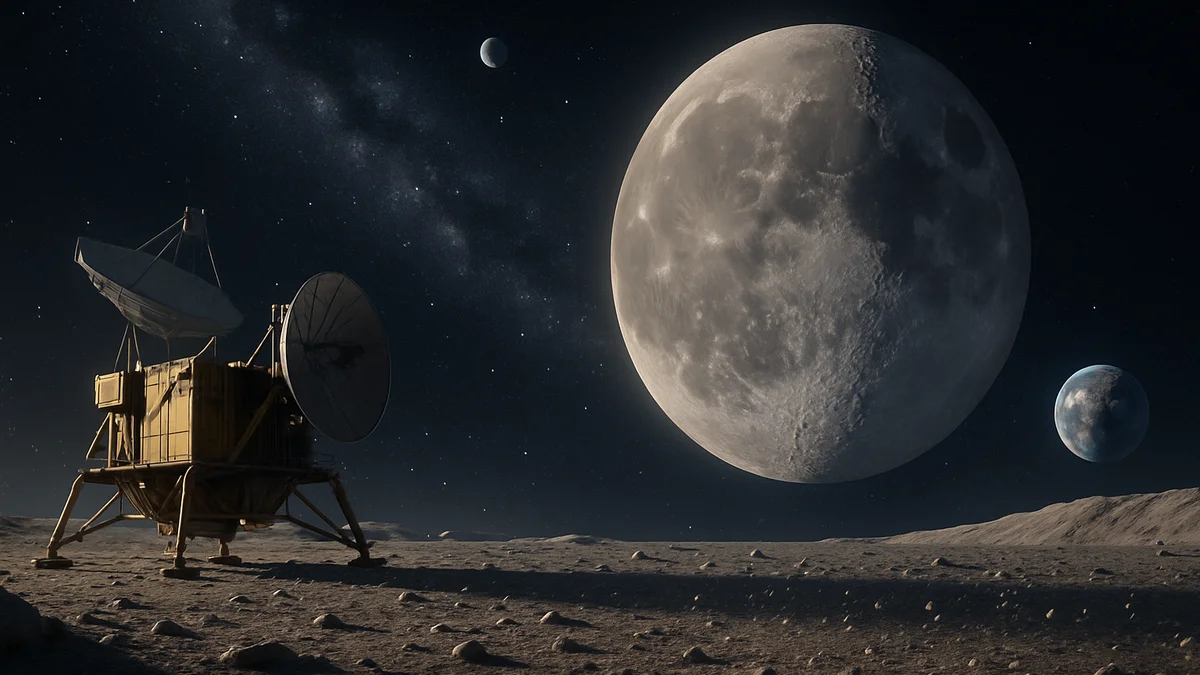
Short answer: a new study argues that if any advanced civilization elsewhere in the galaxy ever built — or lost — large-scale technology, the microscopic wreckage could be sitting right now in the top few meters of lunar soil, and a paper posted to arXiv this year lays out, in specific numbers, how to go looking for it.
What would actually count as "alien dust"?
The paper, led by Lewis J. Pinault of the SETI Institute and submitted to the International Journal of Astrobiology, splits the search into two categories of hypothetical particles. The first are Arkhipov particles — named after Ukrainian astronomer Alexei Arkhipov, who proposed the idea in the 1990s — described as "tiny pieces of unintentional industrial debris" that could be shed during the construction or destruction of enormous megastructures like a Dyson swarm. The second are Bracewell particles, named for physicist Ronald Bracewell: grains "intentionally sent to other solar systems," effectively acting as smart dust rather than accidental litter.
Why look on the Moon, and not here?
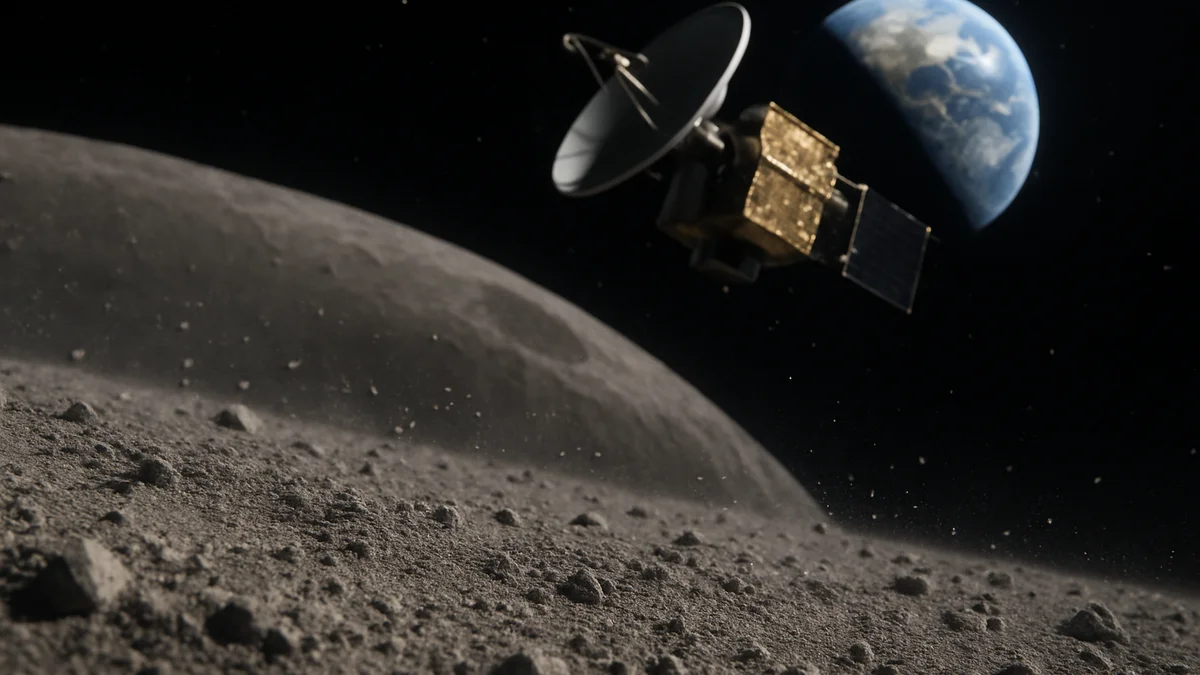
Earth is a terrible place to keep evidence for hundreds of millions of years. Weather, oceans, and plate tectonics recycle the surface constantly. The Moon has none of that: no atmosphere to weather grains away, no water cycle, no plate tectonics to swallow them back into the mantle. Instead, the Moon has "impact gardening" — the slow, constant churn caused by micrometeorite bombardment — which buries particles under up to a few meters of regolith, shielding them from cosmic rays. According to the paper, grains made of sufficiently tough refractory material — the kind of advanced ceramics, graphene, or titanium-tungsten superalloys a technological civilization might plausibly use — could survive there for anywhere from 100 million to 1 billion years.
How fast is too fast?
Not every stray particle would make a clean landing. A grain reaching Earth's orbital distance, 1 AU from the Sun, at a typical interstellar speed of 42 km/s would simply vaporize on impact — anything hitting the Moon faster than about 5 km/s does. The paper notes that solar radiation pressure could slow appropriately sized particles down enough to survive the fall intact, narrowing the search to a specific range of grain sizes and speeds rather than "any dust that happens to be there."
Finding a needle in a trillion grains
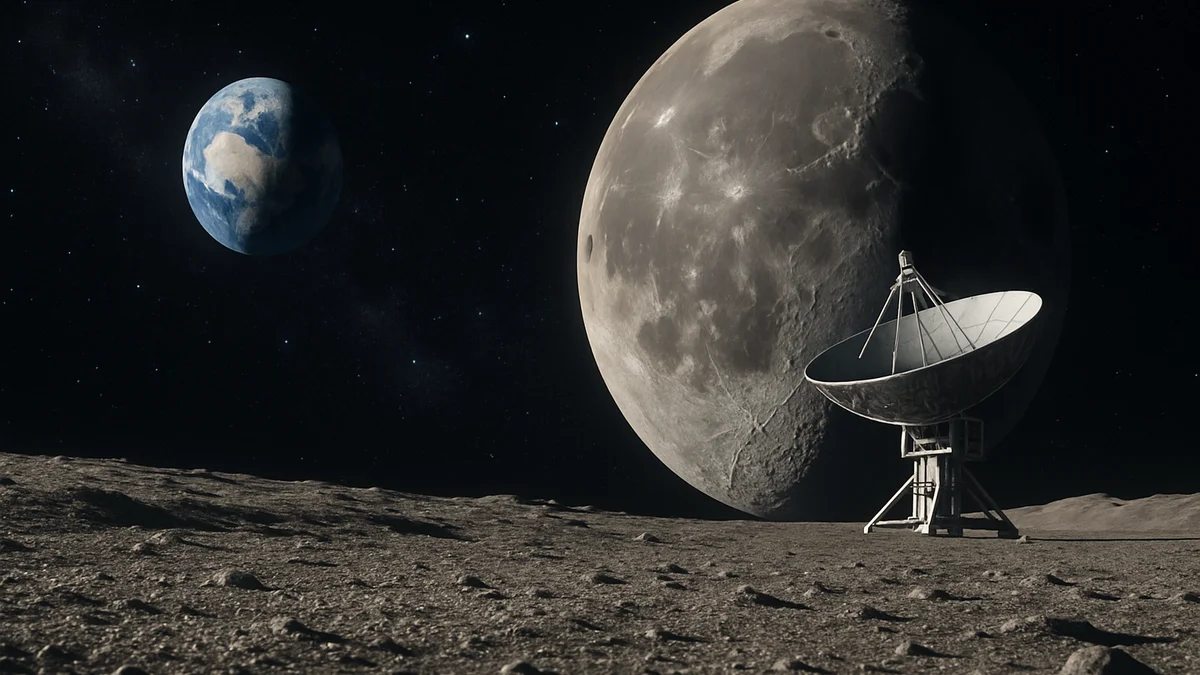
The numbers involved are enormous. One cubic meter of lunar regolith weighs about 1.5 tonnes and contains over a trillion micron-sized grains. The paper's proposed workflow leans on automation to make that searchable at all: high-resolution scanning electron microscopy across bulk samples, an AI system called YOLO-ET to automatically flag anomalous grains, and Focused-Ion-Beam facilities plus nano-CT scanners to examine flagged candidates more closely without destroying them.
What a null result would still prove
Even finding nothing would not be a wasted search. The paper calculates that a clean result from a single cubic meter of regolith would rule out scenarios where as much as 0.1 Earth masses of artificial dust had been dispersed across the galaxy, and would constrain any civilization intentionally seeding probes to a rate below 0.4 kg per billion years. Those numbers only make sense against the timescales involved: the Milky Way is roughly 13 billion years old, and our solar system completes one full galactic orbit — one lap past whatever else might be out there — roughly every 230 million years.
The surface this all depends on
None of this works without the specific, almost boring physical facts of the Moon itself: an airless surface, no active geology, and a soil that has spent billions of years slowly gardening whatever falls on it rather than erasing it. On the real-time 3D simulator at Solar System Live, you can look at that same silent, unweathered surface up close — the same ground that, according to this study, might be quietly filing away evidence of civilizations we've never otherwise detected.