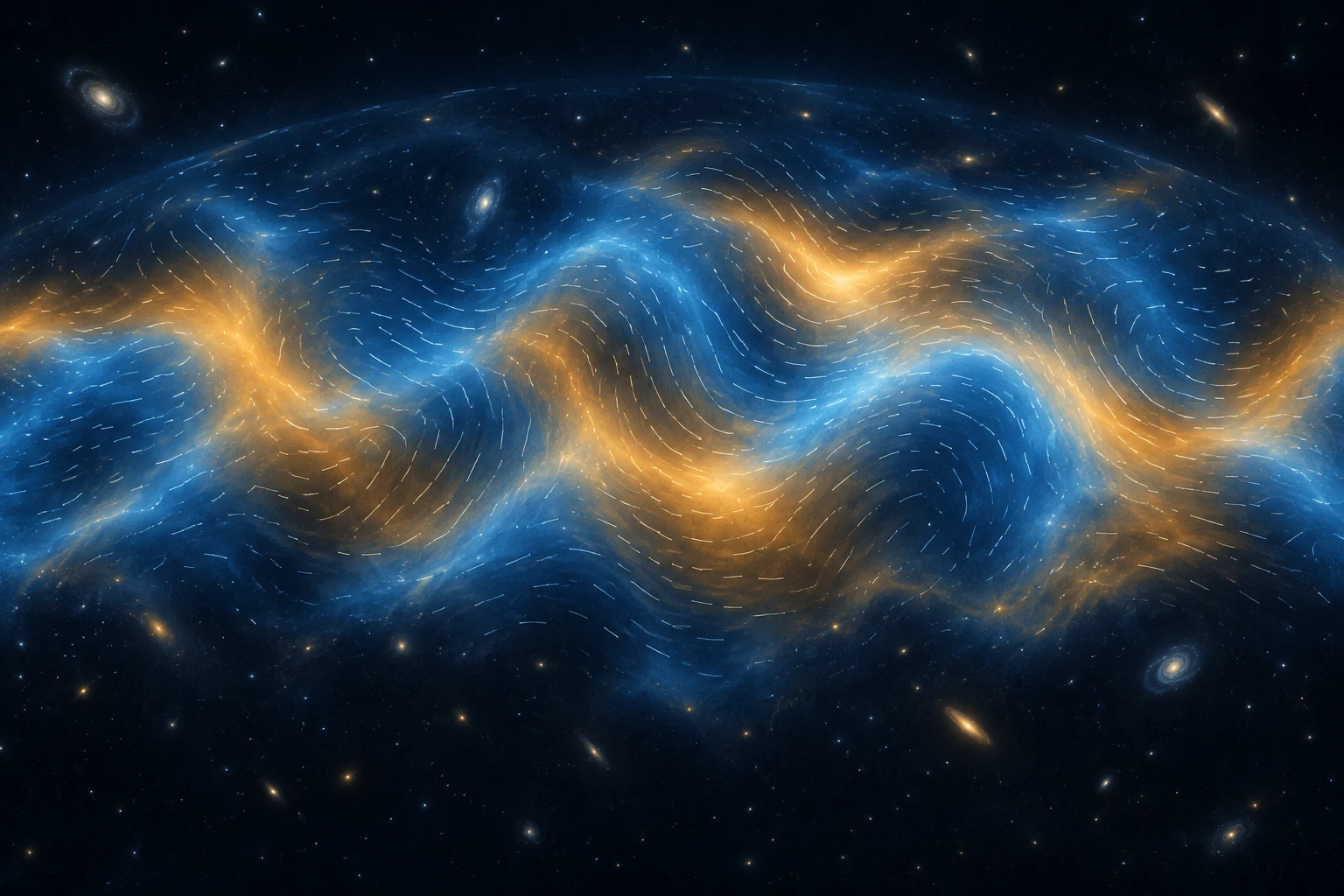
The useful result is a check on measurement reliability, not proof that the universe is literally twisted. A September 2026 paper by Anto I. Lonappan, Brian Keating and Kam Arnold compares calibration patterns in Planck polarization data. The authors explicitly distinguish their new method from confirmation using independent observations. Read the research abstract.
What is the light being measured?
The cosmic microwave background is relic radiation from the early universe, now detected at microwave wavelengths rather than by our eyes. ESA explains that cosmic expansion stretched that light. It is not sunlight reflected from planets, and a picture of it is not a photograph of a nearby cloud. ESA's background explanation.
Polarization adds information about a preferred direction of vibration. In ESA's published visualization, colour represents temperature differences while texture indicates polarization direction. The two visual encodings have different jobs: an attractive pattern alone does not tell you what physical quantity has been measured. ESA's visualization guide.
Why can an instrument imitate a cosmic signal?
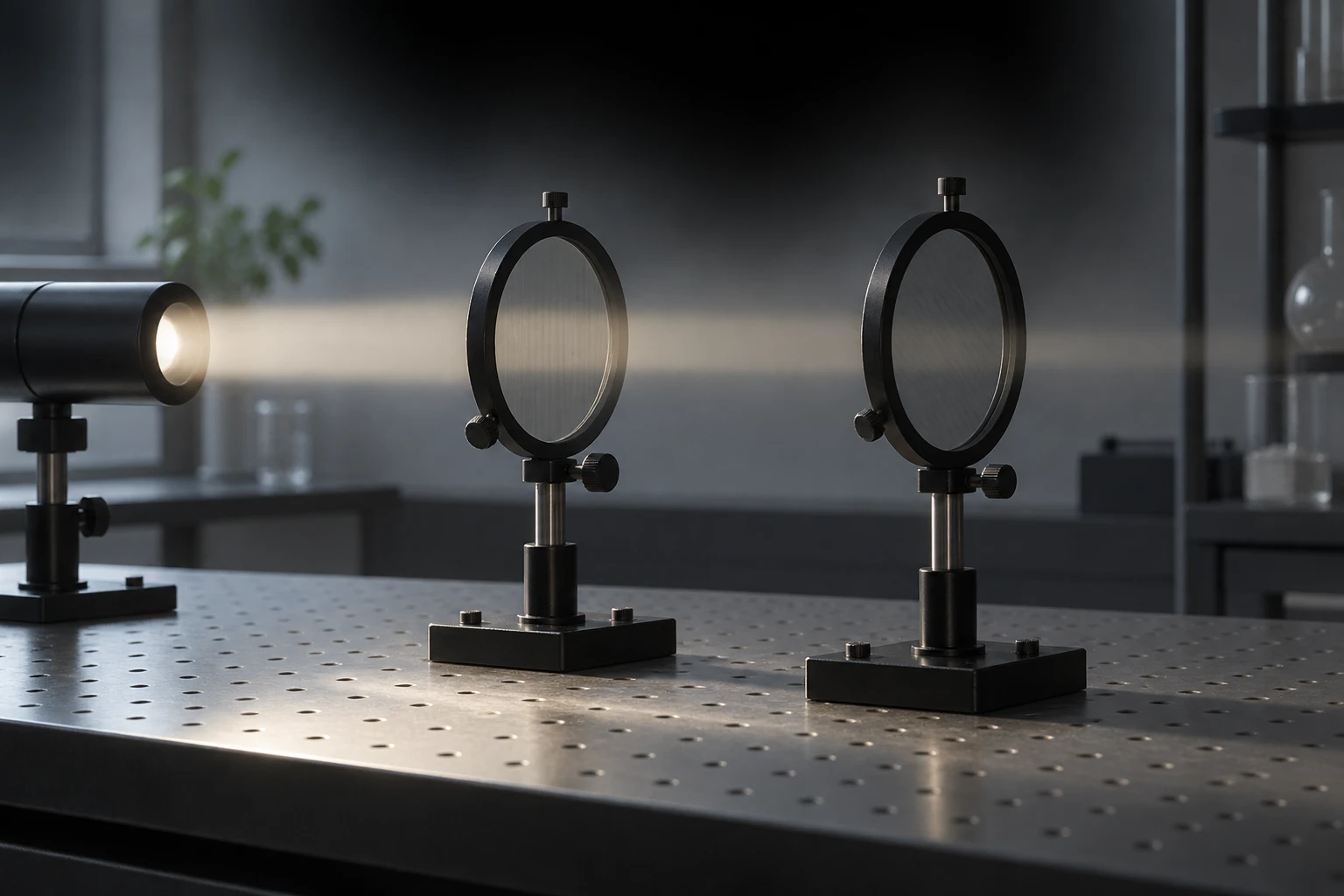
The paper explains the central ambiguity: a common instrumental angle offset and a cosmic rotation can produce indistinguishable effects in this analysis. Its differential estimator compares detector sets so that a rotation common to the maps cancels out. Agreement with the established calibration pattern is therefore a consistency check, not an independent absolute measurement.
Think of this as a reading exercise. If two methods share their observations, agreement between them is useful, but it is not the same claim as two unrelated experiments seeing the same effect. That distinction is worth checking whenever a headline uses words such as “confirmed” or “discovered.”
A three-question filter for the headline
Before treating a surprising result as settled, ask:
- What was measured? Identify the observable before interpreting it.
- What was compared? New data, a new method, or a calibration check are different things.
- What does the method leave unresolved? A limitation in the paper belongs in the explanation, not in fine print.
Applied here, the conclusion is deliberately restrained: the calibration foundation is better checked, while the absolute cosmic-rotation question is not independently settled by this test. Leaving that uncertainty visible makes the news more informative, not less interesting.
Where our solar-system simulator fits
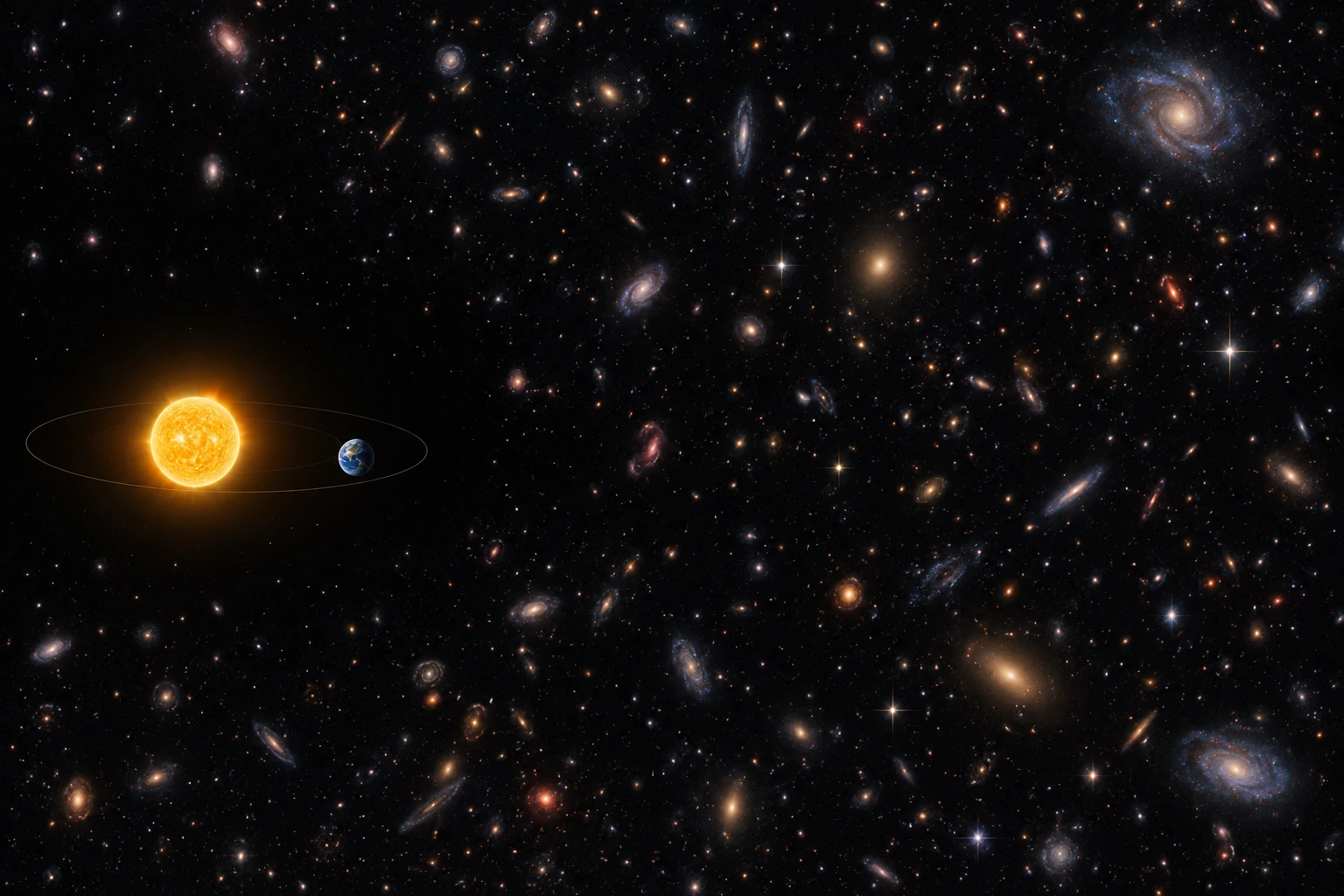
The Solar System Live homepage offers a local planetary perspective, not a CMB detector or a reproduction of this analysis. Use it to separate two questions: where objects are in our solar system, and how researchers infer properties of the early universe. Browse the article index for the latter kind of explanation; do not expect the simulator to reproduce the paper's measurement.
The three accompanying images are AI-generated conceptual illustrations. They are not Planck maps, detector photographs from the study, or scientific evidence; the solar-system scene is not to scale.