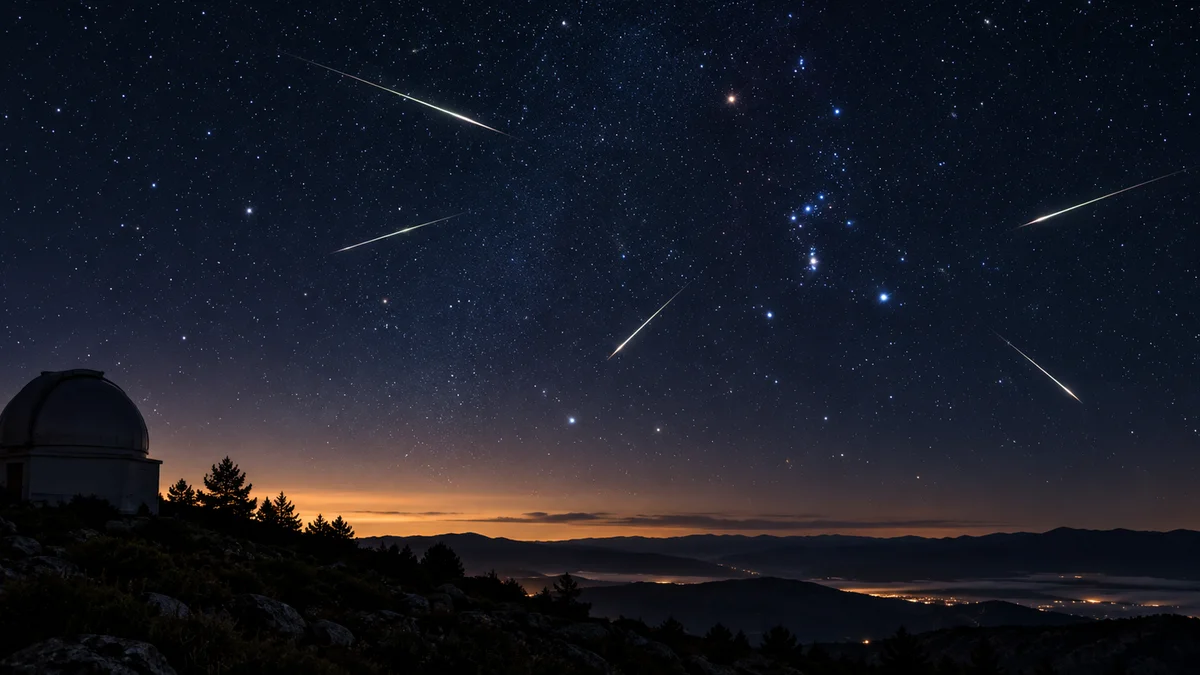
Halley's Comet appeared in 1066, but the comet itself will not be visible tonight. What you may see instead are Orionid meteors: flashes produced when particles left by Halley enter Earth's atmosphere. NASA lists October 21–22 as the Orionids' peak night in 2026.
That gives the famous Bayeux image a connection to the sky outside your window. The embroidery records a human response to a comet; tonight's meteor shower offers a way to investigate the material it left behind. They are different sights, separated by centuries, and neither is a prediction about events on Earth.
What does the Bayeux Tapestry show?
The Bayeux Museum's digital panorama identifies Halley's Comet in the part of the embroidery depicting events in the spring of 1066. ESA dates its appearance to April 24. The Battle of Hastings came later, on October 14, according to the museum's account of the battle.
The order matters. The comet was seen before the battle; the embroidery presents it within a story about a contested throne and a Norman victory. ESA describes the opposed readings: a bad sign for Harold, but a favourable one for William. Those interpretations tell us about the people telling the story. They do not establish that the comet caused, or foretold, the battle's outcome.
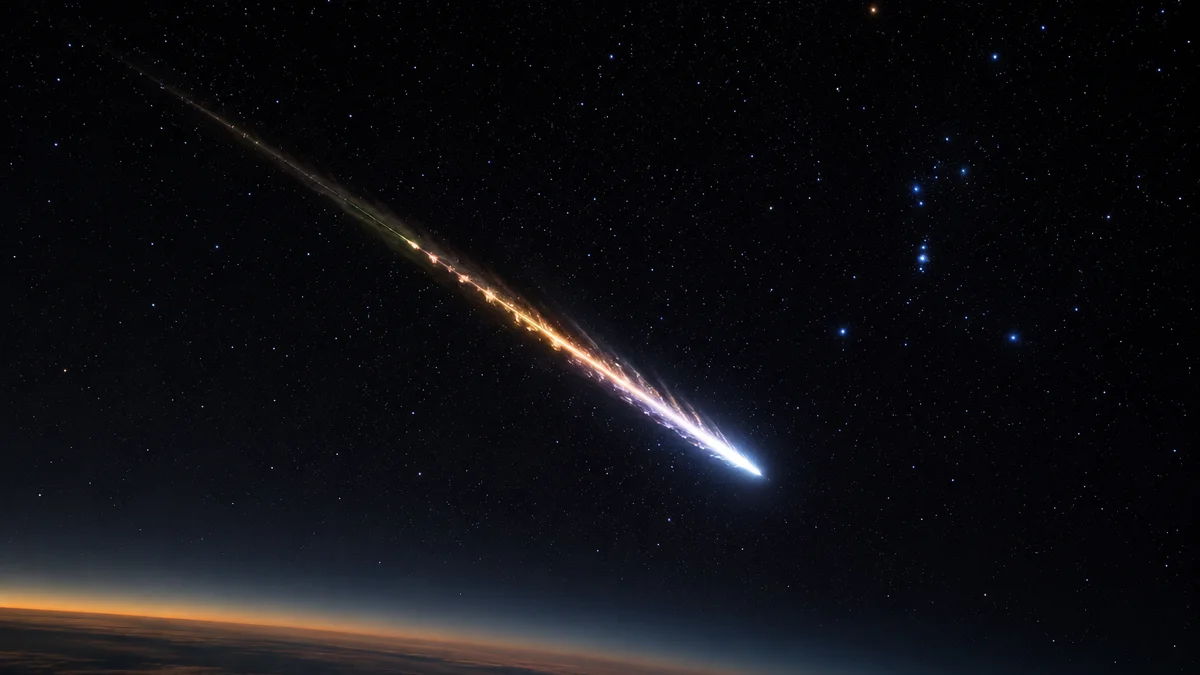
The museum describes the tapestry as a work probably commissioned after the conquest. Its account of the embroidery is useful context when looking at the comet scene: this is a historical depiction with a point of view, not a measurement of where the comet sat among the planets.
How do we know it was Halley?
The people who watched the sky in 1066 did not know the comet by Edmond Halley's name. NASA explains that Halley later compared observations of comets seen in 1531, 1607 and 1682. He proposed that they were returns of one object and predicted another appearance in 1758. Astronomers subsequently connected that periodic comet with much older observations, including the one depicted at Bayeux.
This distinction changes how to read the image. The embroidery is evidence that people noticed an unusual sight and gave it meaning. The identification 1P/Halley comes from later work on recurring appearances and orbital motion. You can value the historical record without treating its interpretation as an astronomical explanation.
| Record or view | What it helps establish | What it cannot show alone | |---|---|---| | Bayeux embroidery | How the comet entered a story about 1066 | The comet's full orbit | | NASA's Halley guide | Why appearances centuries apart are linked to one comet | What every viewer in 1066 believed | | NASA's Orionids guide | Why Halley's debris can produce meteors now | A view of the comet itself tonight |
Are tonight's Orionids the comet returning?
No. NASA says Halley was last seen in Earth's skies in 1986 and is expected to return in 2061. On its journeys through the inner Solar System, the comet sheds material. Earth encounters part of that debris stream each year, and particles that enter our atmosphere make the Orionid meteors visible in October.
A meteor's brief streak and a comet's appearance are therefore related, but they are not the same event. Nor does the name “Orionids” mean the particles come from the constellation Orion. NASA explains that Orion marks the shower's apparent radiant, a direction in our sky; the material originated with Halley.
For a sense of scale, open Solar System Live and locate Earth and the Sun. The planetary view supplies the setting for Earth's passage through cometary debris; it does not show individual Orionid particles or recreate the sky of 1066. Our article on a proposed mission to Halley follows the comet itself toward its next return. The close-up of comet 67P shows what spacecraft images can reveal about a different comet's nucleus and activity.
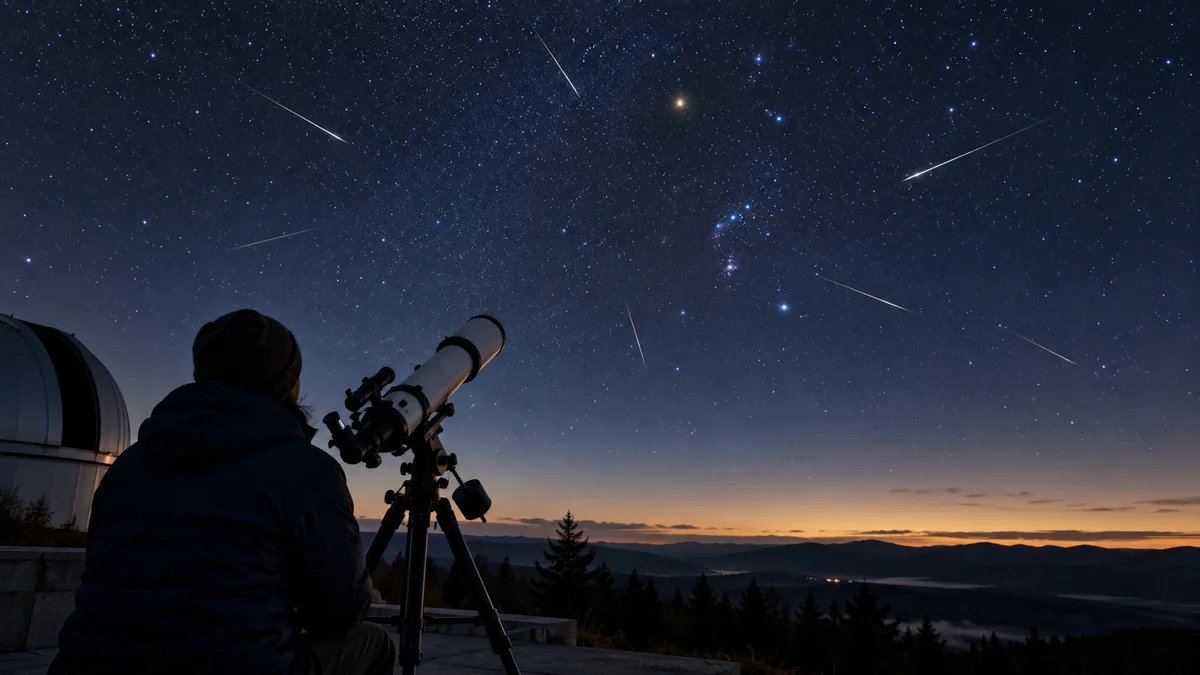
Then, if your sky is clear, follow NASA's Orionid viewing advice: find a dark place and allow time after midnight for your eyes to adjust. You would be watching Halley's remnants, not the comet that the Bayeux embroiderers depicted.