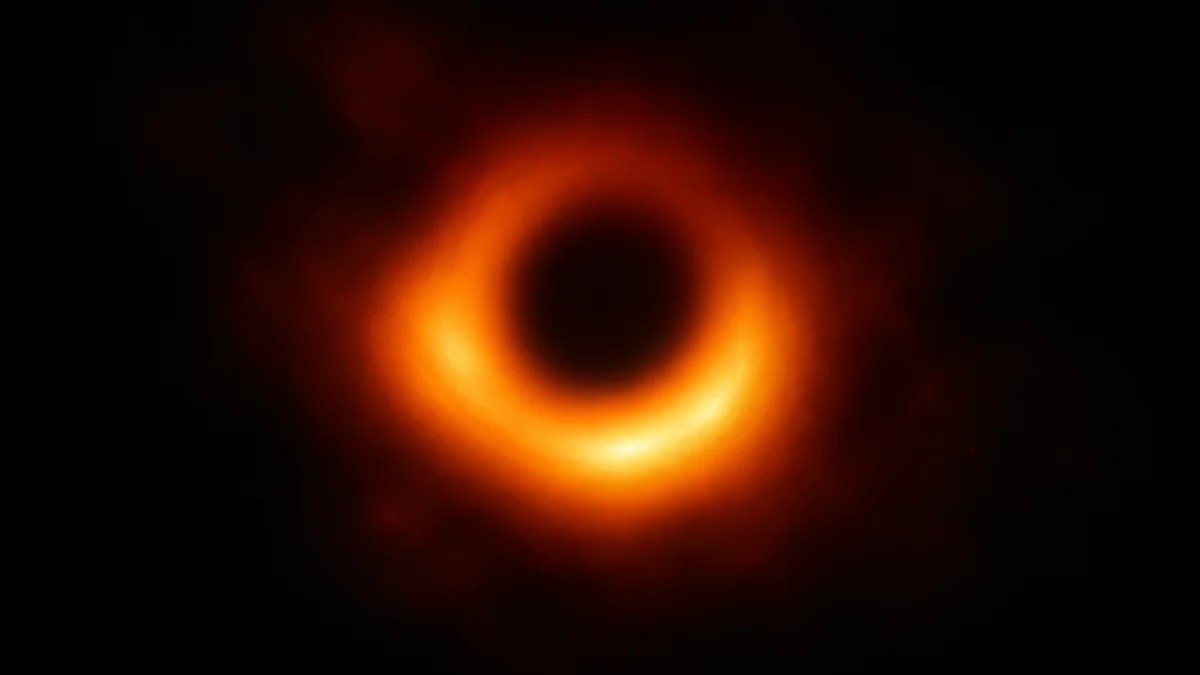
The famous M87 black hole picture comes from real telescope observations, reconstructed into an image by computers. It shows emission around a dark central shadow. ESO classifies the published image as an observation in its original image record.
If you have been exploring Solar System Live, the distinction matters: both a simulated planetary scene and an astronomical observation reach you through a screen. How can you tell what each establishes? Our route through the image and our article archive starts with the evidence behind the pixels.
What are we actually seeing?
The bright structure traces radiation from hot gas around the black hole. Light from inside its event horizon cannot escape. NASA’s explanation identifies the surrounding gas as the source outlining the object.
That means the useful question is not “How did they illuminate something completely dark?” It is “What can the surrounding emission reveal?”
Keep the word shadow separate from surface. ESO explains that the shadow is larger than the event horizon: tracing the dark patch does not amount to tracing a solid object’s exterior. The image caption makes that distinction explicit.
For your first look, identify the bright ring and central depression. Leave the physical interpretation to the accompanying evidence rather than treating the picture as a familiar landscape.
How do separate telescopes become one image?
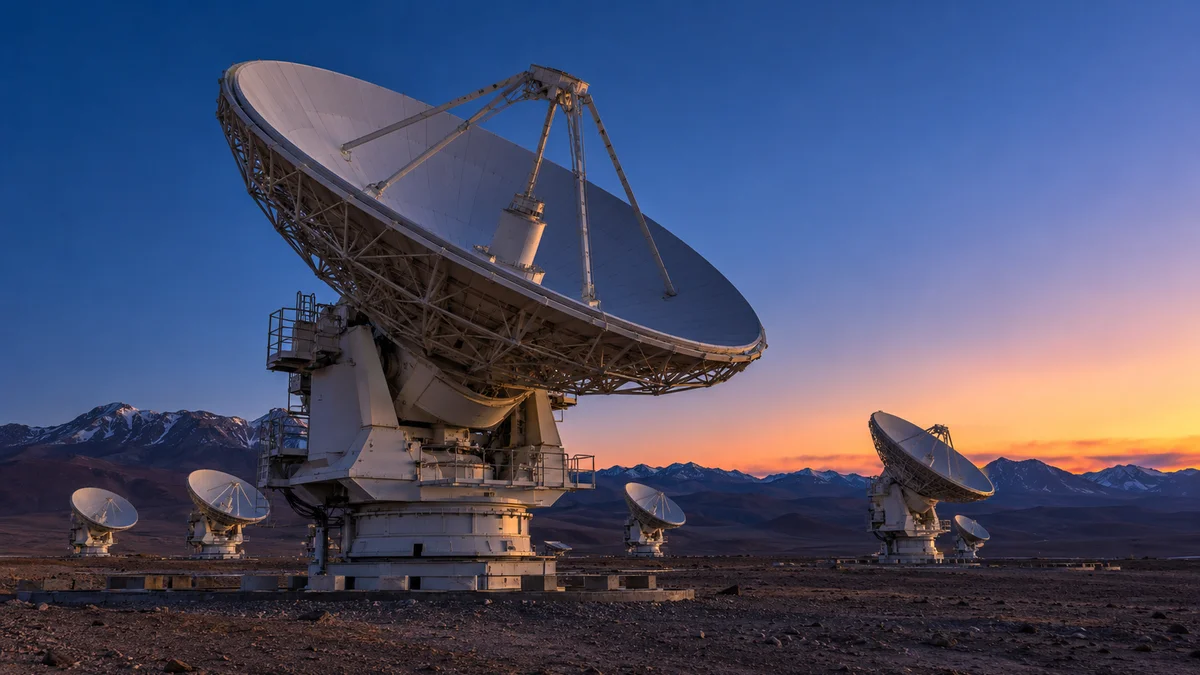
The Event Horizon Telescope combined observations from widely separated radio telescopes using very-long-baseline interferometry. Their separation provides the resolving power of a much larger virtual instrument, as ESO’s announcement explains.
The recorded signals then have to be combined and reconstructed. MIT’s account describes the processing and the independent imaging teams that worked with the observations. This was a chain of measurement and analysis, rather than a camera shutter producing the finished ring in one step. Read the participating institution’s account.
Here is the distinction to carry back to our simulator: “made with a computer” describes a tool, not the origin of the evidence. Ask what entered the computation.
Could the reconstruction simply produce the expected ring?
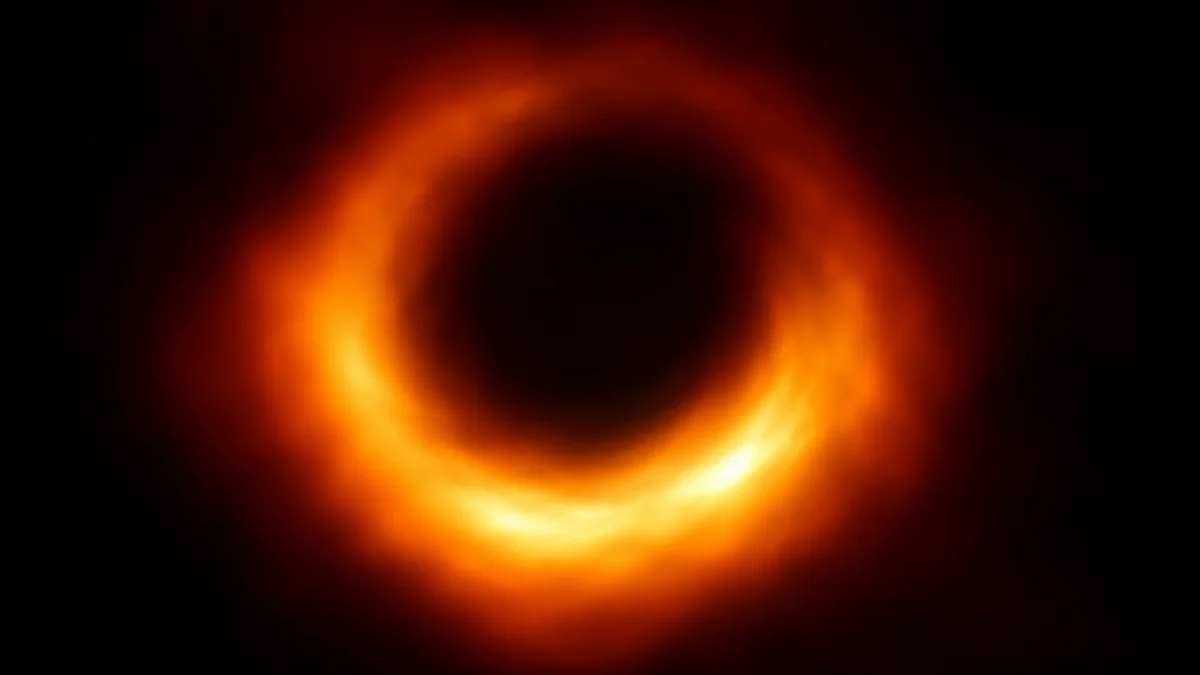
That possibility makes testing essential. The EHT’s imaging paper reports independent reconstructions and trials using synthetic data whose underlying images were known. The ring’s diameter and asymmetry remained stable across the reported tests. The original research describes these checks.
This supports particular features; it does not invite you to treat every small variation as equally secure.
When reading a claim about the image, try making it narrower. “The reconstruction contains a ring” and “this tiny bright feature has a particular physical explanation” are different claims. Look for the test supporting the feature you want to discuss.
Is this a new picture from this week?
The Quanta conversation published on 29 October 2026 revisits how black hole imaging became possible.
The original M87 image discussed here was released on 10 April 2019, using observations from 2017, according to ESO’s dated record. A new discussion does not make the underlying observation new.
For readers accustomed to our real-time simulator, this is a particularly useful check: write down the observation date separately from the publication date.
Which view should you open next?
This is our reading route through Solar System Live and the observational sources. It compares purposes, without presenting simulator output as telescope measurements.
| What you are looking at | What to check first | Your next question | |---|---|---| | Solar System Live’s planetary scene | Its role as a simulation | What arrangement am I exploring? | | The published M87 image | Instrument and observation date | What measurements support this view? | | The reconstruction paper | Tests of image recovery | Which features survive different methods? | | An astronomy image in our archive | Its caption and source | Is this an observation, model or illustration? |
Continue with our [dark matter simulation guide](/articulos/simulacion-materia-oscura-que-muestra-la-imagen/) to practise identifying a modeled view. Our [nearby black hole article](/articulos/agujeros-negros-cerca-sistema-solar/) addresses another evidential question: what would justify identifying a candidate.
Open the official M87 image record now. Find its classification, observing wavelength and release date. You will have a documented answer to “what kind of picture is this?” before interpreting its appearance.