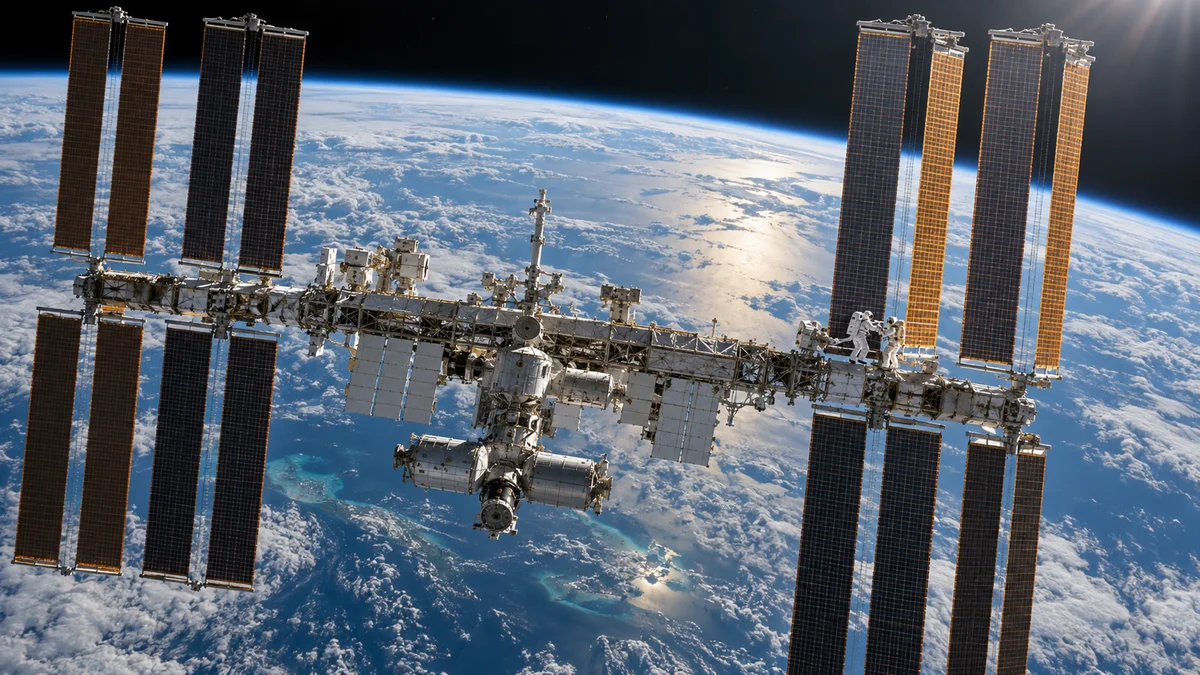
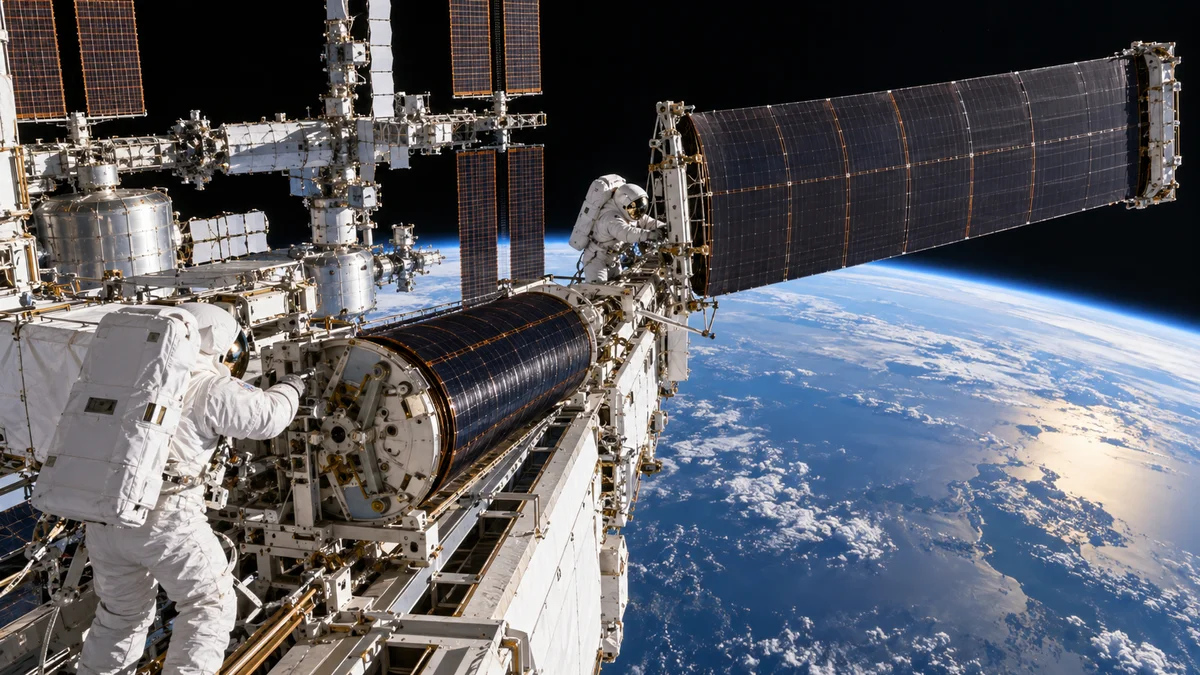
What are ISS spacewalks 100 and 101 for? NASA plans to install and deploy the International Space Station’s last two roll-out solar arrays. The first spacewalk is scheduled for October 29, 2026; the second for November 5. If the work goes as planned, the eighth array will complete the station’s power augmentation.
That is the useful answer behind the numbered events. This is an upgrade to a spacecraft orbiting Earth, not a mission travelling toward the Sun. A solar-system view can help place the station’s work in context, while NASA’s spacewalk advisory supplies the tasks a planetary simulator cannot show.
What will happen on each spacewalk?
NASA names astronaut Anil Menon and Canadian Space Agency astronaut Joshua Kutryk for both outings. They are scheduled to leave through the station’s Quest airlock and work on different electrical power channels. Reading the two assignments side by side makes the sequence clearer than treating “100 and 101” as a single job.
| Planned outing | Date | Array and power channel | Expected place in the upgrade | |---|---|---|---| | U.S. spacewalk 100 | October 29, 2026 | Seventh roll-out solar array, on channel 2A | Add power for station operations, including the eventual safe, controlled deorbit | | U.S. spacewalk 101 | November 5, 2026 | Eighth and final roll-out solar array, on channel 3B | Complete the planned power augmentation |
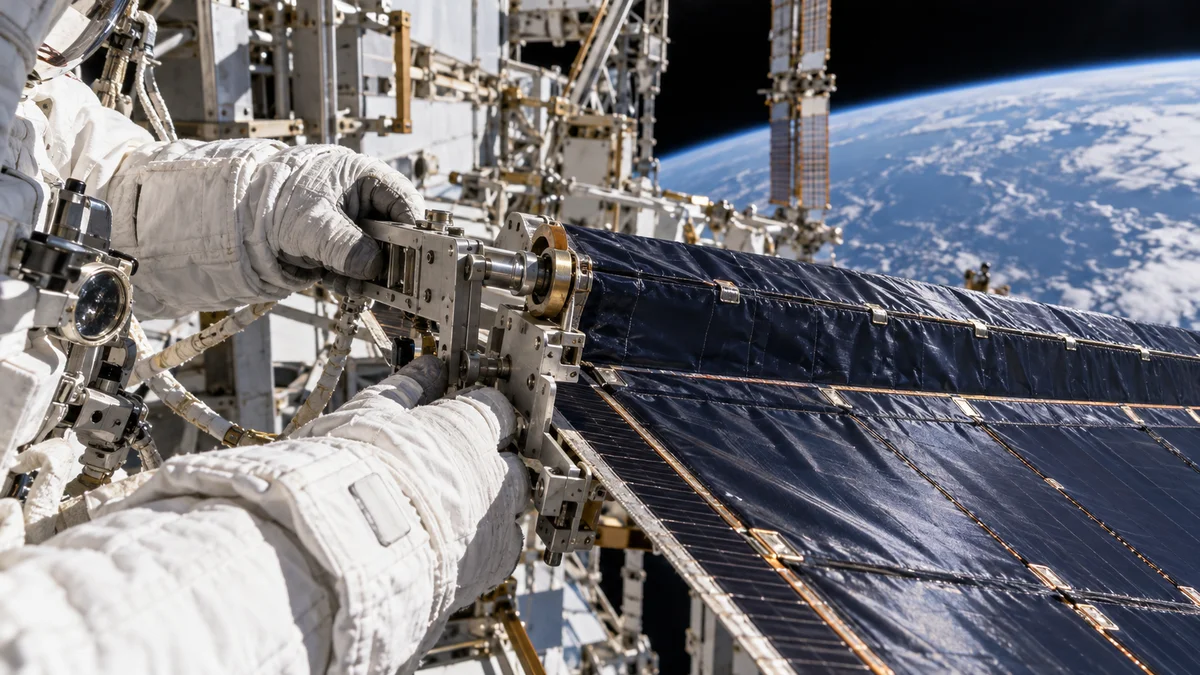
These are planned tasks as of October 15, not completed installations. NASA says it will provide further coverage details closer to each operation. The agency has also scheduled an October 20 news conference to preview the work; that briefing is separate from the spacewalks themselves.
How much more power is expected?
NASA says the complete set of eight roll-out arrays will raise available power by up to 30%. Its advisory describes the station’s electrical generation capacity changing from 160 kilowatts to approximately 215 kilowatts. The words up to and approximately matter: these are the agency’s stated expectations for the completed upgrade, not a measurement from the two outings that have yet to happen.
The extra power has more than one purpose. NASA connects the seventh array with critical station operations and specifically includes a safe, controlled deorbit among them. That does not mean a deorbit is taking place during spacewalk 100. It means the upgraded power system is intended to support that eventual operation as well as the station’s other needs.
Why are they called 100 and 101?
“U.S. spacewalks 100 and 101” are NASA’s labels for these two outings. They do not mean that only 101 spacewalks have ever supported the station. NASA says the same events will be the 285th and 286th spacewalks in support of its assembly, maintenance and upgrades.
The two numbering descriptions answer different questions. One identifies this U.S. spacewalk sequence; the other places the outings in the broader history of work on the station. The planned pair also includes Kutryk, a Canadian Space Agency astronaut, so “U.S.” should not be read as a statement that both participants are American.
What can our solar-system view add?
Open Earth in Solar System Live and locate it in relation to the Sun. That is the large-scale setting for a station that orbits Earth and uses solar arrays for electrical power. The simulator does not show the ISS, its Quest airlock, the 2A and 3B channels, or an astronaut installing an array.
Our guide to how fast the ISS orbits Earth addresses the station’s motion. The article on Progress 96’s orbital rendezvous asks how another spacecraft reaches it. This planned work answers a third question: what people must maintain and upgrade after reaching the station. Keeping those questions separate makes the scale of the simulator useful without asking it to depict equipment it cannot display.
Start with the Sun and Earth in the simulator, then return to NASA’s assignment for each spacewalk. After the scheduled dates, check NASA’s later coverage before treating the planned installations or power gain as accomplished.