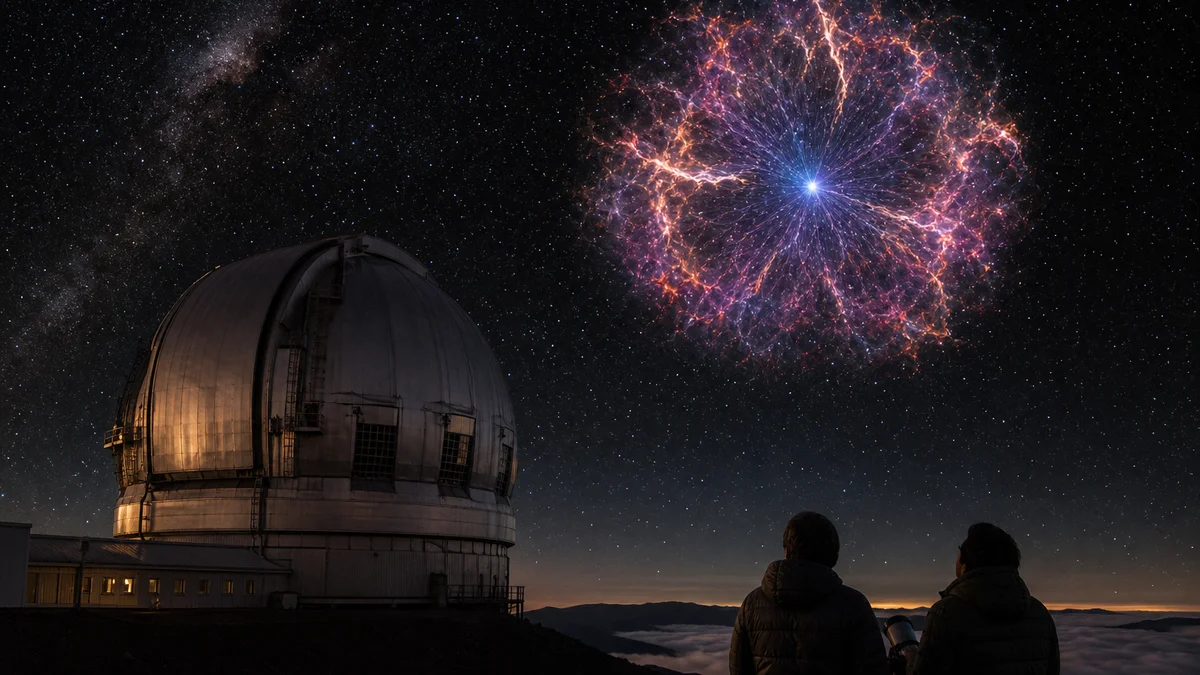
Pa 30 may be the remains of an explosion whose light was recorded by observers in 1181. The image offers striking clues, but it does not settle what caused the unusual supernova or exactly how the nebula’s filaments formed.
The useful way to read Pa 30 is to keep three things apart: what the image shows, what historical records suggest, and what astronomers still consider possible. That distinction turns a beautiful picture into a guide to an ongoing investigation.
What is the Pa 30 image showing?
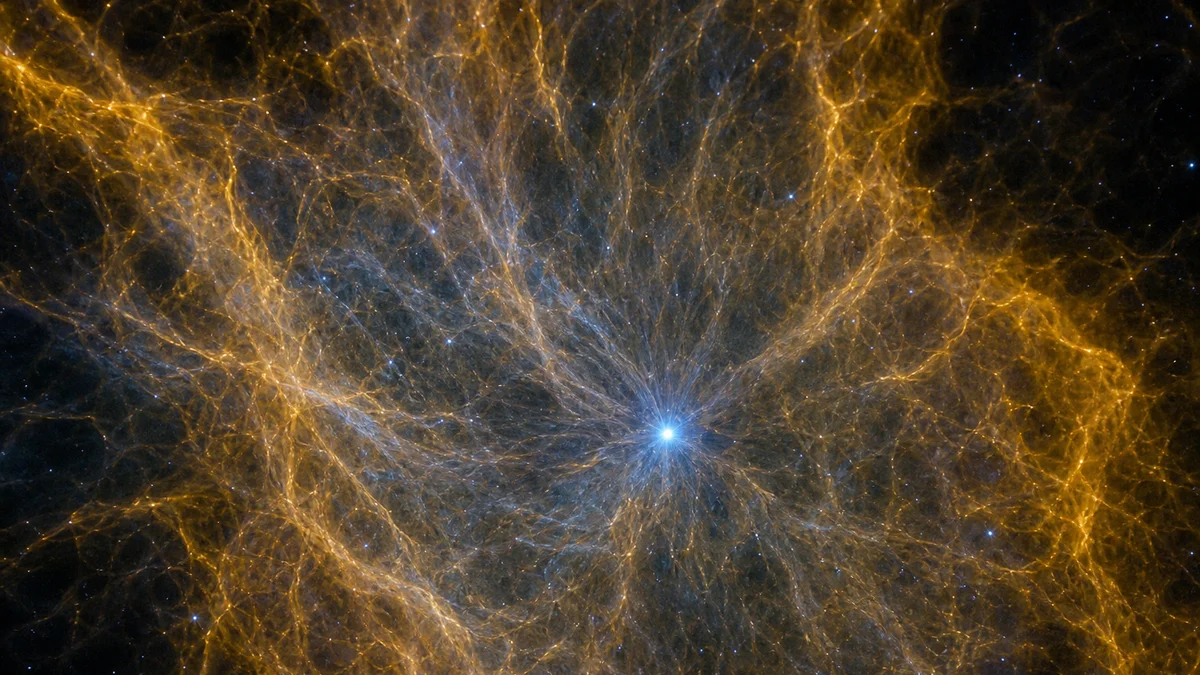
The image featured by NASA’s Astronomy Picture of the Day shows nebula Pa 30, observed with the Gemini North Telescope in Hawaiʻi. Its radial filaments spread out from a mysterious central star. NASA describes that star as extremely hot and producing a strong wind; the wind may have formed the filaments.
The image also contains small, pearl-like knots strung along those structures. NASA gives their diameter as four light-days. That measurement belongs to the knots, not to the whole nebula. It is a reminder that the image contains structure on a scale that a quick glance might miss.
| Clue in NASA’s account | What it supports | What remains open | |---|---|---| | Pa 30 is likely a supernova remnant | The nebula may be material left by an explosion | The exact history of the explosion | | Historical “guest star” records describe an appearance in 1181 lasting 185 days | The records may point to the event associated with Pa 30 | The identification is presented as a belief, not a certainty | | The explosion is classified as Type Iax | It was an unusual kind of supernova | Astronomers do not know exactly what happened | | A merger of two white dwarfs is proposed | It is one possible explanation for the explosion | It remains a theory | | A hot central star drives a strong wind | The wind may have formed the radial filaments | The image caption says “possibly,” not definitively |
How does an old “guest star” connect to a nebula?
The link begins with historical observations. Separate records from Chinese, Japanese and Arabic astronomers describe a “guest star” that appeared in the sky for 185 days in 1181. NASA says this bright point is believed to have come from the supernova that created Pa 30.
That wording matters. The records are a historical clue; the connection to this particular remnant is presented as a belief. The image lets us look at a possible aftermath, while the written records describe a temporary point of light seen centuries ago. They are different kinds of evidence brought together to investigate one event.
NASA calls the question of how the explosion made this nebula an 845-year-old mystery. The phrase points to the long span between the historical sighting and today’s attempt to understand the object. It does not mean the central star or every detail of the explosion is already explained.
What does “Type Iax” tell us—and what does it not?
NASA identifies the explosion as a Type Iax supernova and says astronomers do not know exactly what happened. A merger of two white dwarfs is thought to be a possible cause. In other words, the classification describes the unusual explosion being discussed; the proposed merger is an explanation that remains under consideration.
The same care applies to the nebula’s shape. The radial filaments may have been formed by the strong wind from the central star. “May” is the useful word here: the image shows the filaments, while their origin is presented as a possibility. Keeping observation and explanation separate is especially helpful when a picture looks as though it ought to tell the whole story.
What should a reader look for in the image?
Start at the centre, then trace the radial filaments outward. Look for the pearl-like knots along them. NASA’s description offers a compact map: a hot, mysterious central star; a strong wind that may shape the filaments; and knots with a stated diameter of four light-days.
Then ask a second question: which parts of that map are observations, and which are explanations? The filaments and knots are visible features described in the APOD account. The wind’s role in shaping them is tentative. The possible white-dwarf merger is another hypothesis, this time about the original explosion.
Pa 30 is far beyond the planets shown in a solar-system simulator, so it is not an object to locate in Solar System Live. A useful next step is to compare its image with NASA’s caption: identify the central star, follow the filaments, and keep each explanation at the level of certainty the source gives it.