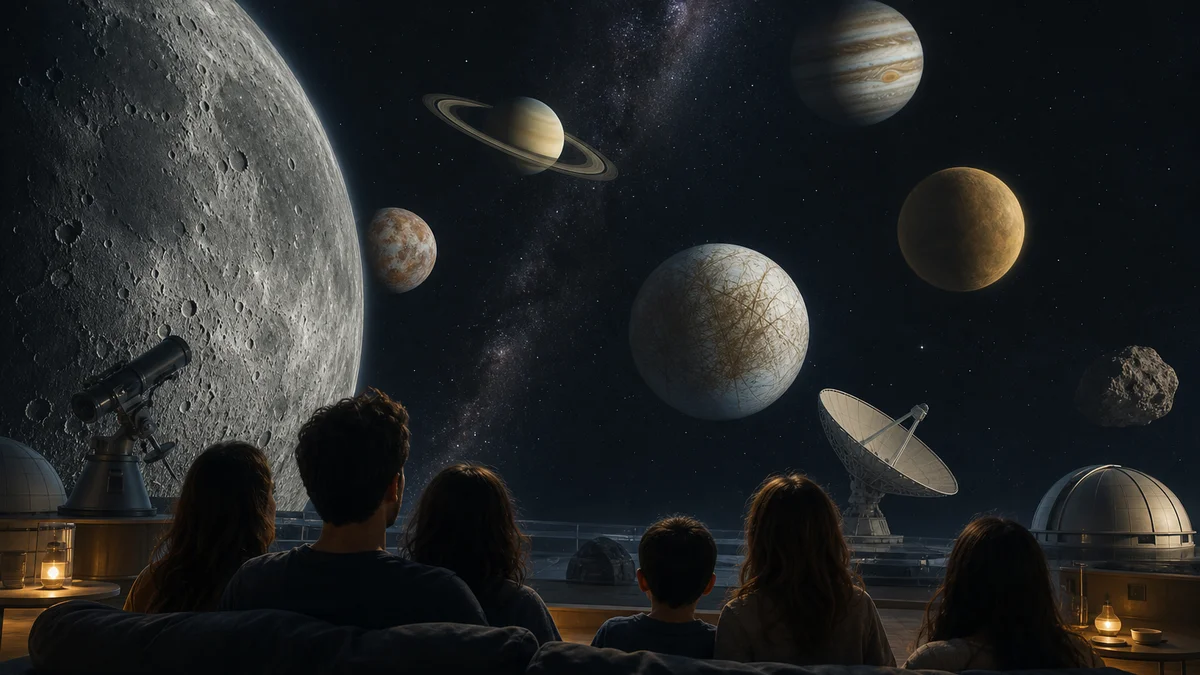
NASA's science team just put together a "movie night" list: ten short films and episodes already streaming on NASA+, grouped as a lineup for a night in. Not all ten are breaking news — but four of them point straight at real places in the solar system, places you can fly to right now in a live 3D simulator instead of just watching footage of them.
The ten picks on NASA's list
The lineup, as published, runs through: Other Worlds: Europa, Cosmic Dawn, Planetary Defenders, Our Alien Earth: The Lava Tubes of Mauna Loa, Hawai'i, Our Alien Earth: Greece, Other Worlds: Titan, NASA Explorers: Sample Return, NASA Explorers: Space School, Listen to the Universe, and, to close the night, Space Out! — described on NASA's own page as the moment to "relax with some tunes and images of Earth's beautiful Moon" after a night of exploring worlds, tracking asteroids and listening to the universe.
Four of these are places, not just stories
Strip away the production value and four titles on that list name an actual destination:
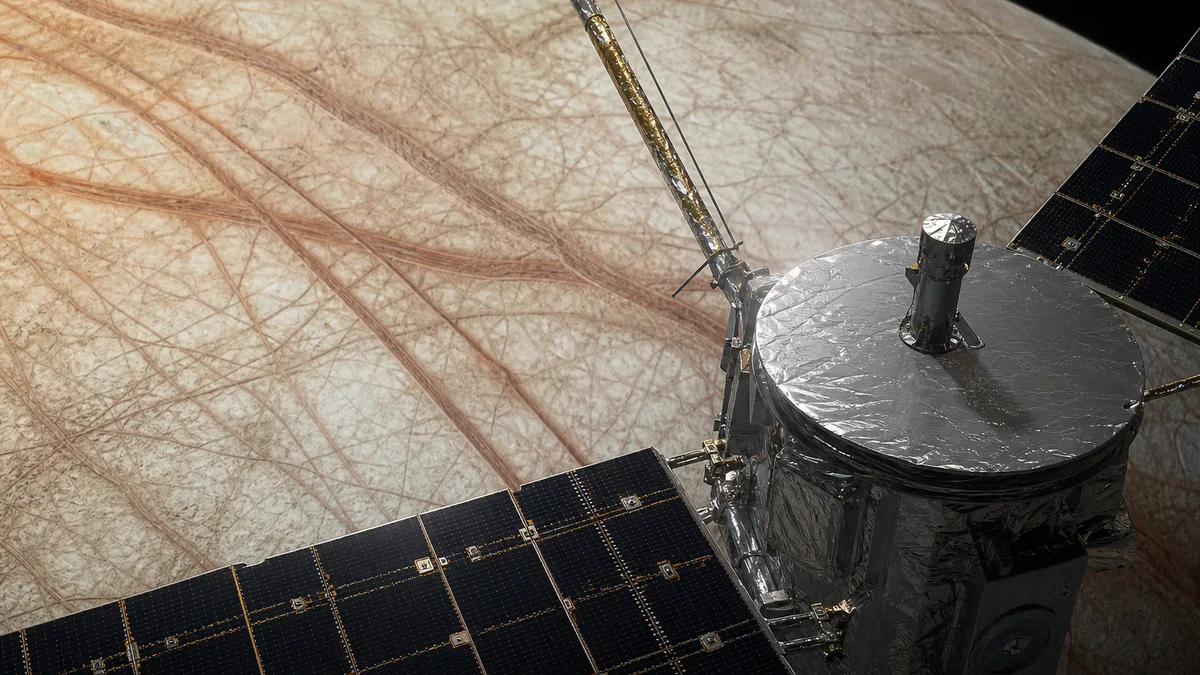
- Europa — Jupiter's icy moon, one of the solar system's leading candidates for a hidden ocean under its frozen shell.
- Titan — Saturn's largest moon, the only moon in the solar system known to hold a thick atmosphere and standing liquid on its surface.
- Planetary Defenders — about the asteroids NASA tracks across the inner solar system, the same population that shows up as moving dots crossing a simulator's orbital view.
- Space Out! — built entirely around our own Moon.
All four of those bodies are sitting in orbit, moving right now, inside Solar System Live — the kind of thing a short film can only show you from one angle, at one moment someone else chose to film.
When Earth plays a stand-in
Two of the ten picks, the "Our Alien Earth" entries, aren't about other worlds at all — they're about places on our own planet, lava tubes in Hawai'i and sites in Greece, used as stand-ins for conditions found elsewhere in the solar system. It's a reminder that a lot of planetary science starts with fieldwork here before it gets applied to a moon or a crater millions of kilometers away.
The rest of the lineup
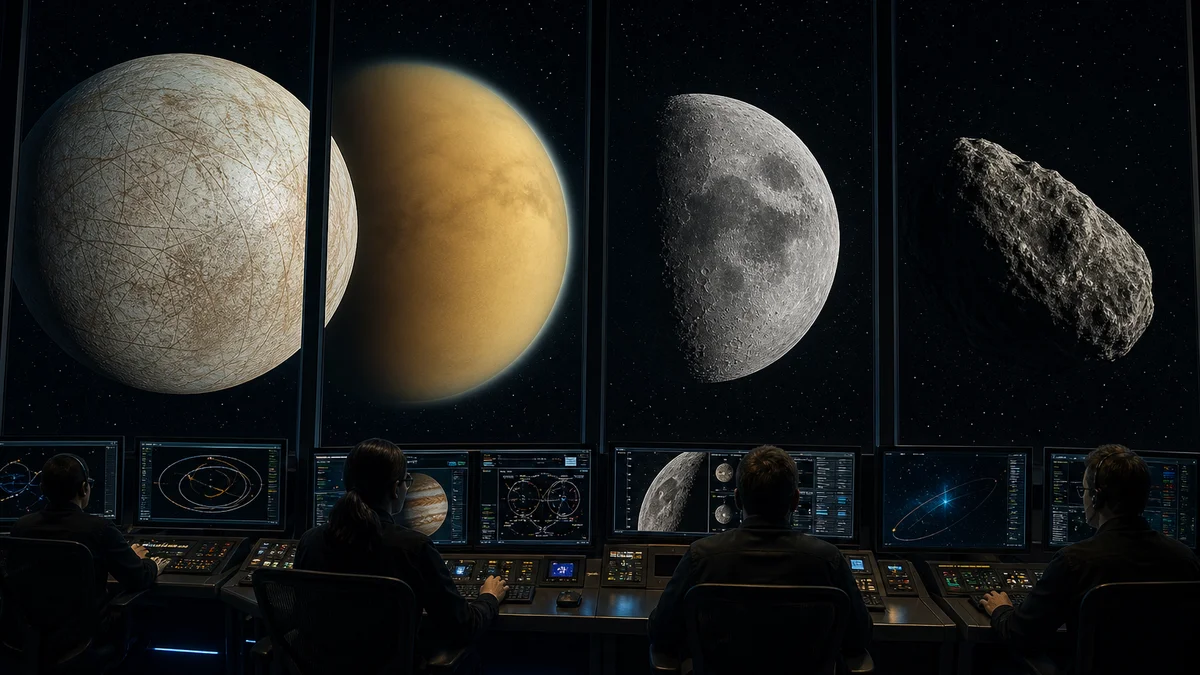
Cosmic Dawn looks further out, toward the early universe rather than our own neighborhood. NASA Explorers: Sample Return and NASA Explorers: Space School follow the people and missions behind the agency's work, rather than a single world. Listen to the Universe turns astronomical data into sound — a different sense entirely for exploring the same sky.
Why pair the movie with the live view
A film gives you a fixed story and a fixed angle on Europa or Titan. A simulator gives you the freedom to go find them yourself: locate Jupiter, zoom into its moons, find Europa's position tonight; do the same around Saturn for Titan; or just pull up the Moon the way Space Out! closes its own lineup. Watching NASA's picks and then checking where those same worlds actually are right now is two different, complementary ways of looking at the same solar system.
What to do next
Open Solar System Live, find Jupiter and Saturn, and locate Europa and Titan where they are tonight, before or after watching NASA's picks. The movie tells the story; the simulator shows you where the story is actually happening.