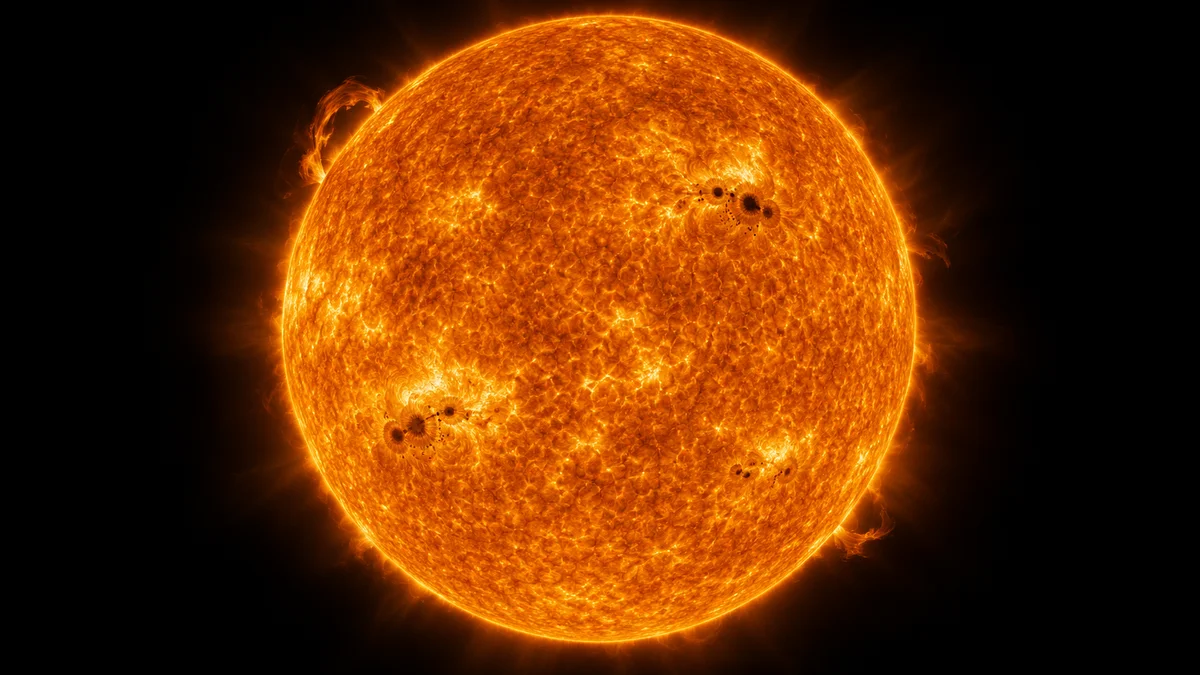
No. The Sun produces energy through fusion in its hot core. Muon-catalyzed fusion follows a different route, allowing nuclei to fuse without a hot plasma. Compare NASA’s explanation of the Sun with Rikkyo University’s account of muon research.
For anyone arriving from Solar System Live, that distinction answers a tempting question: does a laboratory fusion experiment reproduce the star at the centre of our simulated planetary system? Sharing the word fusion does not make the conditions interchangeable.
The Quanta essay published on 2 November brings cold fusion back into discussion. Here, our route starts with the Sun, then separates the laboratory measurement from the illustration and the promise of useful energy.
What happens inside the Sun?
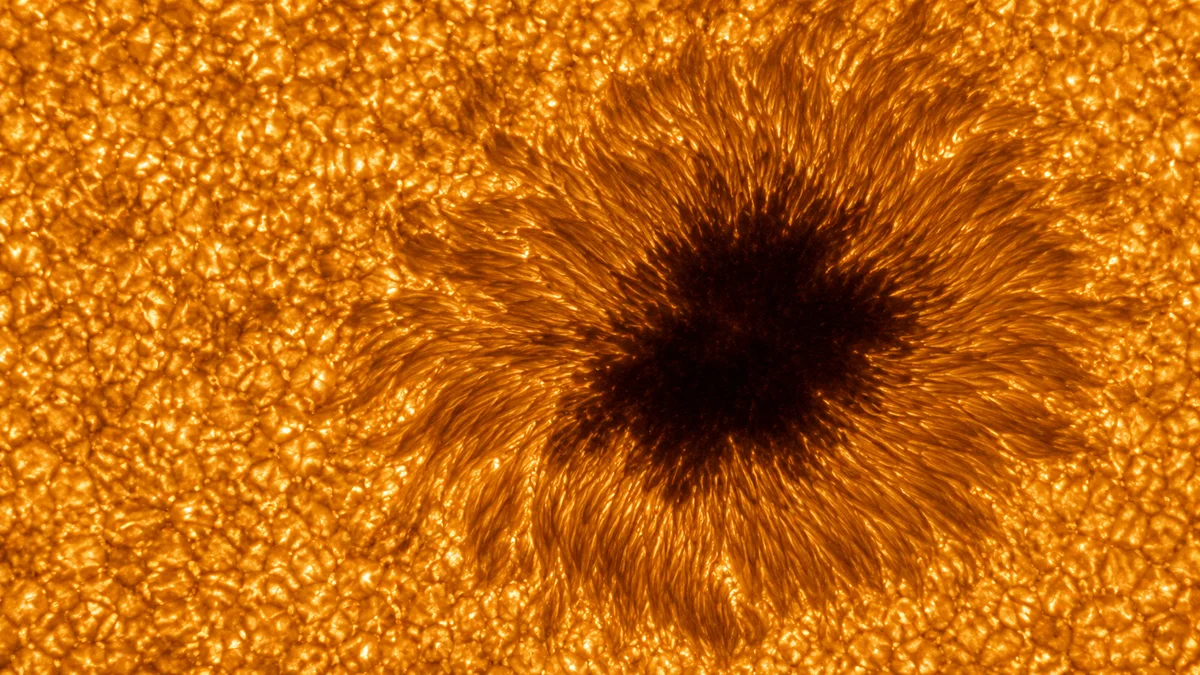
Hydrogen fuses into helium in the solar core, where NASA gives a temperature of approximately 15 million degrees Celsius. The visible surface, or photosphere, is a different region. NASA’s solar structure guide identifies both.
Locate the Sun in Solar System Live, then pause before interpreting its appearance. A simulated exterior gives you a place to begin exploring; it does not let you inspect nuclear reactions.
This is a useful exercise in choosing the right source. Ask the simulator about the planetary scene. Ask the solar structure explanation where energy originates. Asking both resources the same question would conceal what each contributes.
How can muons change the conditions?
Rikkyo describes replacing electrons with muons to form much smaller hydrogen molecules. Bringing the nuclei close together makes fusion possible without the hot plasma used in other approaches. Its explanation says the mechanism can operate even at room temperature. Read the university’s description.
That describes a mechanism, not the temperature of every experiment investigating it. Keep the general explanation separate from the particular apparatus used in a paper.
Likewise, “fusion can occur” and “this system supplies useful energy” are separate claims. Before accepting the second, look for a measured energy balance covering the equipment as well as the reaction.
What did researchers actually observe in 2026?
A study published online on 15 April reports X-rays from resonance states of muonic deuterium molecules. The measured spectrum agrees with calculations that include molecular vibrational states. The authors identify this pathway as important to forming the molecules involved in muon-catalyzed fusion. Read the research abstract.
The result concerns molecular processes. It does not establish an electricity-producing machine. Nor should its April publication date become a November discovery simply because a new essay has renewed interest.
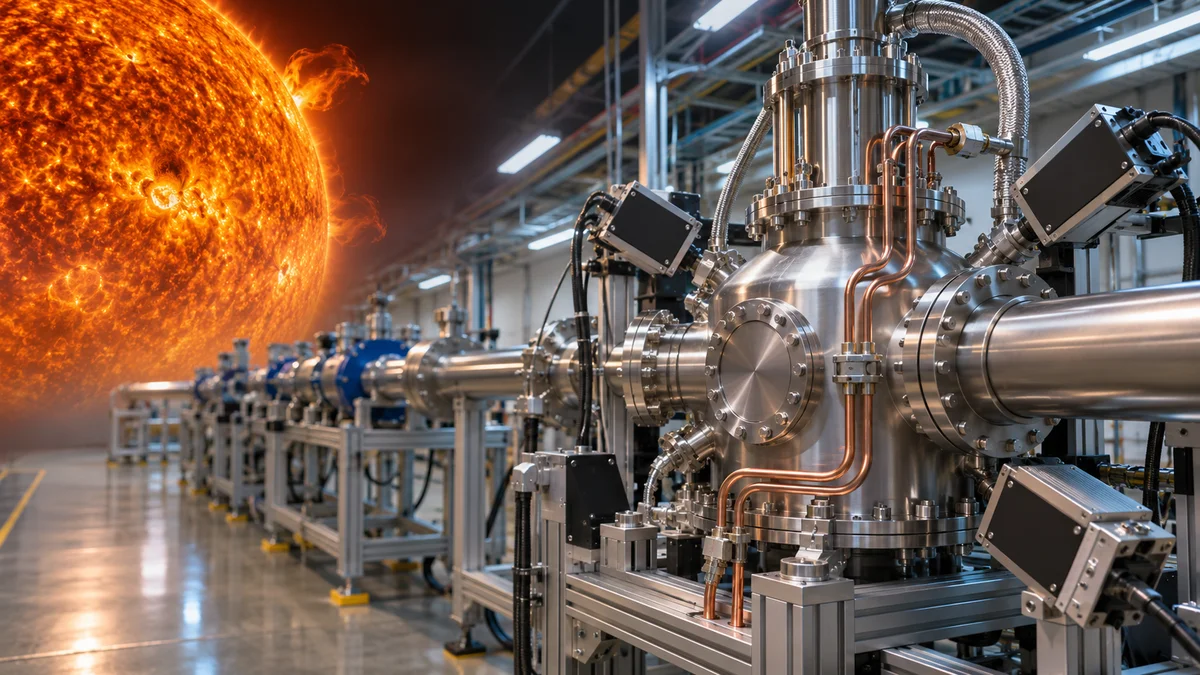
Which image answers which question?
This is our Solar System Live comparison worksheet, not a collection of original experimental measurements.
| Resource | Question to bring | Conclusion to avoid | |---|---|---| | The Sun in our simulator | Where is the Sun in the planetary scene? | Its displayed appearance reveals its nuclear reactions | | NASA’s solar structure guide | Where does solar fusion occur? | Every fusion experiment must reproduce the whole Sun | | The study’s measured spectrum | What signal supports the molecular interpretation? | A detected signal proves useful electricity generation | | The laboratory illustration | Which stages does the explanation connect? | Every drawn element is a directly photographed object |
Our guide to [astronomical photographs and computer processing](/articulos/foto-agujero-negro-real-o-simulacion/) helps with the distinction between a picture and its underlying evidence. For another comparison of representations with different purposes, continue to [our dark matter simulation guide](/articulos/simulacion-materia-oscura-que-muestra-la-imagen/).
What should you check next?
Open the research record and compare Figure 1, a process schematic, with Figure 2, the X-ray spectrum. The figure captions identify their different roles.
Write one sentence for each: “This drawing explains…” and “This measurement supports…”. Then add what evidence you would require for a claim about energy production. You will have a clearer answer than either calling every fusion experiment a miniature Sun or treating every use of “cold fusion” as the same claim.