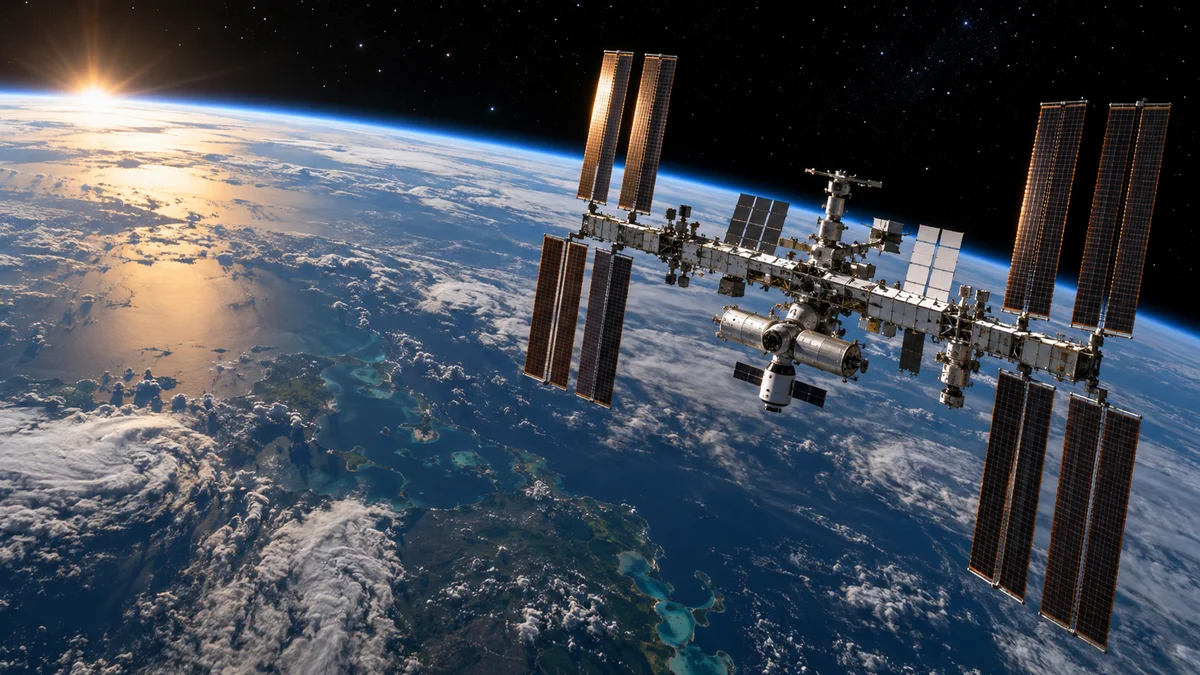
Crew-12 spent 237 days living and working in orbit, completed more than 3,792 orbits around Earth, and returned to the Pacific on October 8, 2026. Those figures, reported by NASA, tell us more than the splashdown date alone: they show the repeated scale of a space-station mission and point toward the research the crew carried out.
The clearest way to read this mission is to keep three things together: time aboard the station, laps around Earth, and the work done between them. NASA’s summary provides those coordinates, along with the crew’s names and examples of their investigations. It does not turn the mission into an interplanetary trip: the thousands of orbits were around Earth.
How long was Crew-12 in orbit?
NASA reports that the four crew members spent 237 days living and working in orbit. They launched on February 13 and docked with the orbiting laboratory a day later. They returned to Earth on October 8, landing in the Pacific Ocean off the coast of Los Angeles.
| Mission measure | NASA’s figure or description | What it helps explain | |---|---|---| | Time living and working in orbit | 237 days | The duration NASA attributes to the mission | | Orbits around Earth | More than 3,792 | How often the crew circled our planet | | Splashdown | October 8, 2026, off Los Angeles | The reported return date and location | | Crew | Jessica Meir, Jack Hathaway, Sophie Adenot, Andrey Fedyaev | The four people aboard | | Research | Hundreds of hours | The scale of the scientific work described by NASA |
The figures describe different parts of the same mission. Days tell us how long the crew lived and worked in orbit; orbital count describes repeated circuits around Earth. Neither number, by itself, describes every experiment or event aboard the station.
What does “more than 3,792 orbits” mean?
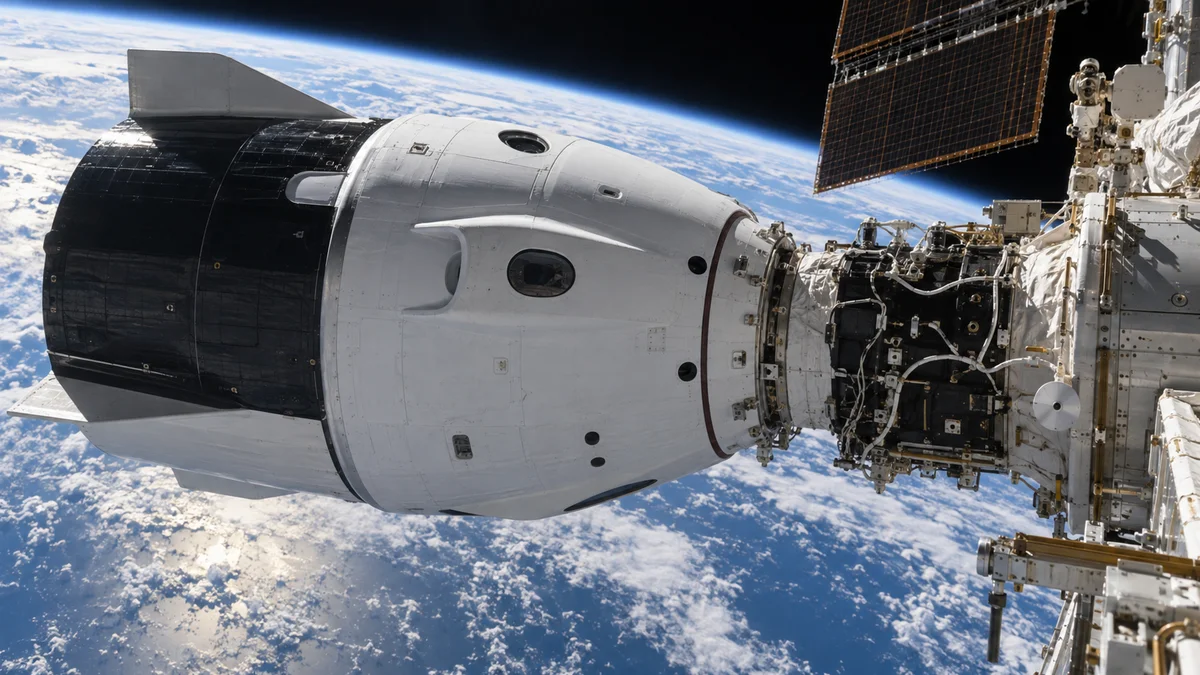
It means NASA reports that the crew completed thousands of circuits around Earth during their mission. The number makes the station’s orbital setting easier to picture: the astronauts’ work took place while their laboratory repeatedly circled the same planet.
NASA also says the crew traveled more than 100 million miles. That distance and the orbit count are reported together in the agency’s release, but they are not an invitation to picture a route through the solar system. The destination of the return was Earth, and the landing was in the Pacific. The useful comparison here is between sustained work in orbit and a return to the surface of the same world.
The orbit count also provides a way to think about duration. Crew-12’s 237 days were not spent at a fixed point above one place on Earth. The station was moving around the planet throughout the mission, while the crew conducted research aboard it.
What science did Crew-12 work on?
NASA describes hundreds of hours of research, including investigations into stem-cell production for cell-based therapies, making intravenous fluid on demand for future missions, and how bacteria that cause pneumonia can lead to long-term heart damage. The agency also says the crew conducted nutrition-focused research and examined how physical characteristics may affect blood flow during spaceflight.
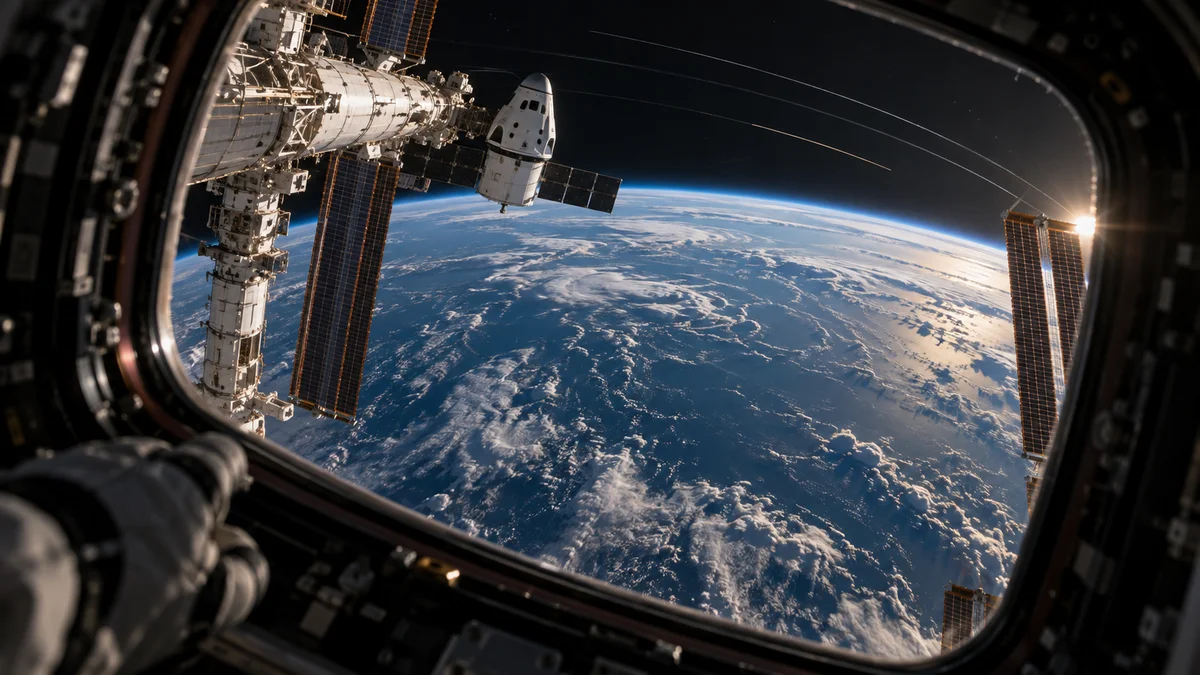
These are distinct questions rather than one general claim that space research automatically produces a particular benefit. Some work concerns possible applications for people on Earth; other work addresses keeping astronauts safe and preparing for future exploration. NASA’s account connects station research to knowledge and technologies relevant to human exploration of the Moon and Mars, without saying that every experiment has already produced a treatment or a finished technology.
What happened when the crew returned?
The Dragon spacecraft Freedom splashed down in the Pacific off Los Angeles on October 8. NASA identifies the people aboard as astronauts Jessica Meir and Jack Hathaway, European Space Agency astronaut Sophie Adenot, and Roscosmos cosmonaut Andrey Fedyaev. Recovery teams retrieved the spacecraft and crew shortly after landing, according to the agency.
The landing closes the timeline described in NASA’s release, but the main scientific value of the mission is not measured by the splashdown alone. The number of days and orbits tells us about the environment in which the work took place; the list of investigations gives a better sense of what the crew was doing there.
How does Crew-12 fit into a solar-system view?
Crew-12’s story is about activity around Earth, which is one planet in the solar system. A planetary simulator can help place Earth among its neighbours and show its motion around the Sun, but Solar System Live does not show the station’s detailed orbit or reconstruct the crew’s experiments.
That distinction is useful: one scale concerns planets moving around the Sun; another concerns a crew working in orbit around Earth. To explore the first, open Earth in the Solar System Live simulator. Then return to NASA’s Crew-12 mission report and use its mission figures as a guide: time in orbit, circuits around Earth, research, and the route home.