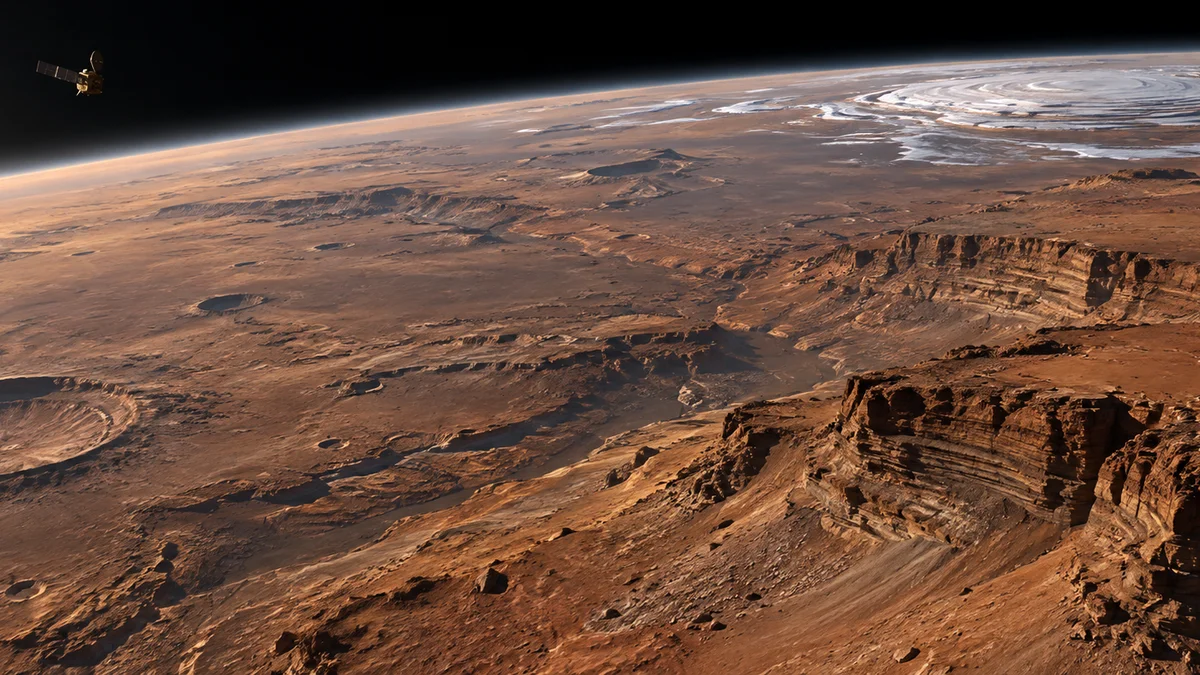
Terraforming Mars could change the ice, rocks and atmosphere that scientists need to study before they can reconstruct the planet’s history. The immediate question is not whether a warmer Mars would be appealing. It is whether changing a world on a planetary scale could erase evidence before we know how to read it.
In an October 2026 opinion article, planetary scientists and ethicists call for that decision to receive public scientific scrutiny. Solar System Live offers a useful starting point: locate Mars in the present Solar System, then ask which questions that planetary view cannot answer. The record at stake lies in material that must be observed and sampled, not in the planet’s position on a screen.
What evidence could a warmer Mars disturb?
NASA’s Mars science objectives separate several investigations: possible ancient life, past habitability, changing climate, and the history of water ice and other materials. That distinction helps make the concern specific. A change to Mars would not merely produce a different-looking planet; it could change the evidence used to explain how the present planet came to be.
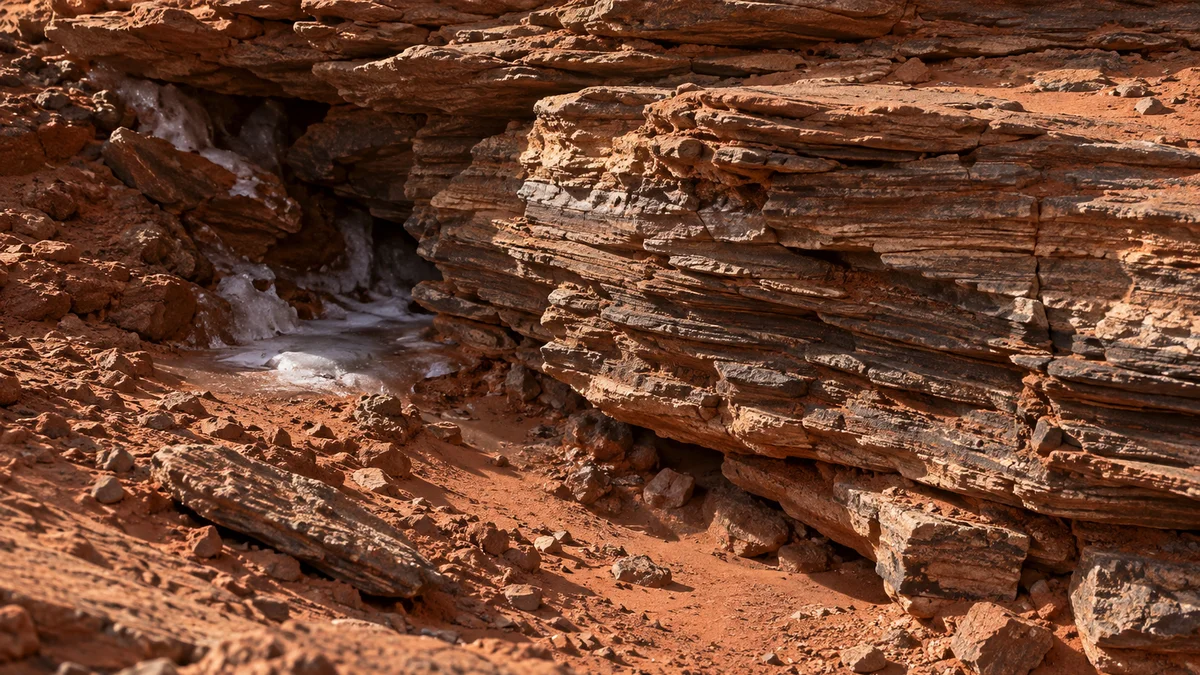
| Record to investigate | Question it helps answer | Why changing Mars matters | |---|---|---| | Ice and its relationship with dust and the atmosphere | How did Martian climate vary? | Warming could disturb deposits before their history is adequately studied. | | Rocks and ancient environments | Where were conditions once habitable? | Altering their setting can make earlier conditions harder to reconstruct. | | Organic material and possible biological traces | Did life ever exist there? | New material or chemical change could complicate the interpretation of a future finding. |
These are risks and research questions, not proof that Martian life exists. NASA says earlier missions have found compelling evidence that Mars was once habitable, while the search for evidence of ancient life remains an objective. The authors of the terraforming argument are asking what should be learned before an intervention could make those questions harder to answer.
Our guide to Mars’s gullies shows why careful interpretation matters: a landform that looks like evidence of water needs more than appearance alone to explain it. The article on the origin of Mars’s moons asks a related kind of question: what new measurements could distinguish competing histories? Neither question can be settled by making the scene look more familiar.
Can we terraform Mars now?
“Terraforming” covers different proposed interventions, so one technical result cannot settle every proposal. A NASA assessment of releasing carbon dioxide already present on Mars found that accessible supplies would not provide the atmospheric warming needed to make the planet Earth-like with present-day technology.
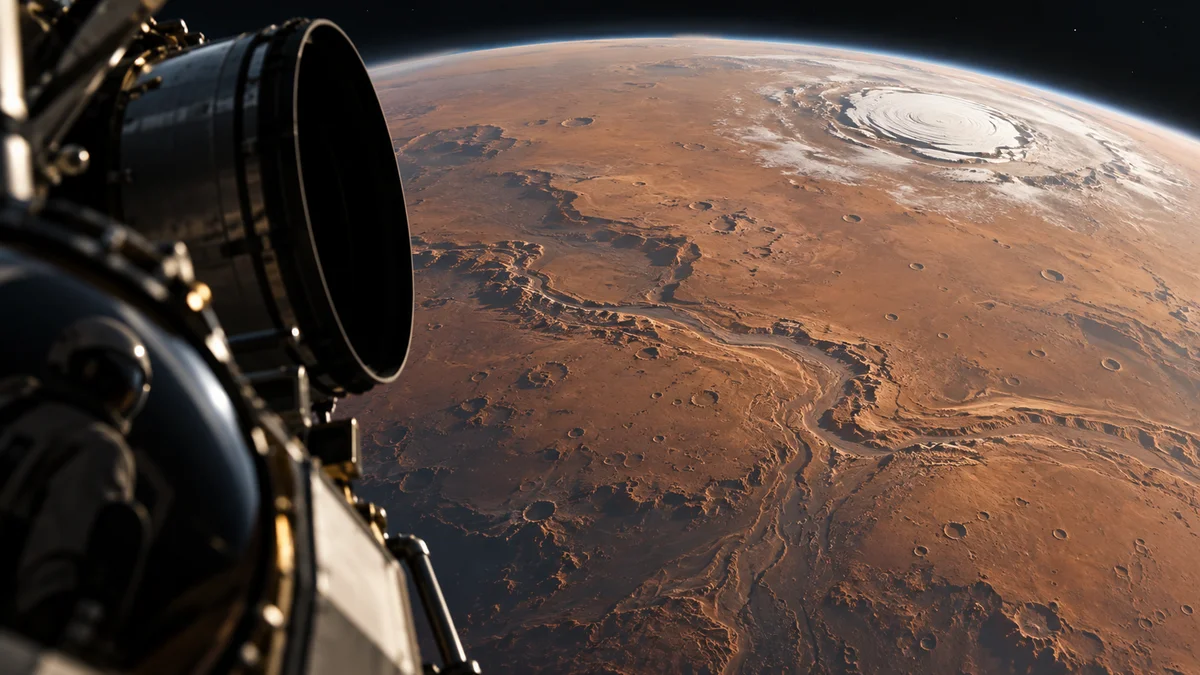
The recent opinion article discusses a different idea: particles introduced into the atmosphere to increase warming. That is a research proposal, not evidence that Mars is being transformed or that a complete habitable environment can be produced. Its relevance here is the possibility of attempting a large intervention before the scientific and ethical questions have been resolved.
Does planetary protection already answer the ethical question?
COSPAR’s planetary protection panel advises on avoiding biological and organic contamination during missions. It explains two central aims: preserve investigations into life and its origins, and protect Earth when material returns from another world. Its policy is a voluntary international standard, with measures that depend on the destination and mission.
COSPAR also states that its policy does not protect planetary environments for their own sake. The authors’ proposal is therefore broader than routine spacecraft cleanliness: they want international discussion of deliberate changes to a whole planet. Existing precautions address important parts of exploration, but they do not by themselves decide who may approve a transformation, what evidence must be collected first, or whose interests should count.
Open Mars in Solar System Live and identify the planet as it is represented today. Then read NASA’s Mars science objectives with the table above in mind. The simulator gives you the planetary setting; the science plan shows the questions still attached to the real ice, rocks and atmosphere. Those questions are the concrete reason to debate terraforming before attempting it.